


Why Single Stage vs Two Stage vs Variable Speed Options Matter for Your Northern Utah Home
When it comes to single stage vs two stage vs variable speed options, the system you choose directly shapes how comfortable your home feels, how much you pay each month in energy costs, and how long your equipment lasts. For homeowners in North Ogden and across Northern Utah — where summers can push temperatures well above 90°F and winters demand reliable, consistent heat — this is not a small decision.
Here is a quick breakdown of how the three options compare:
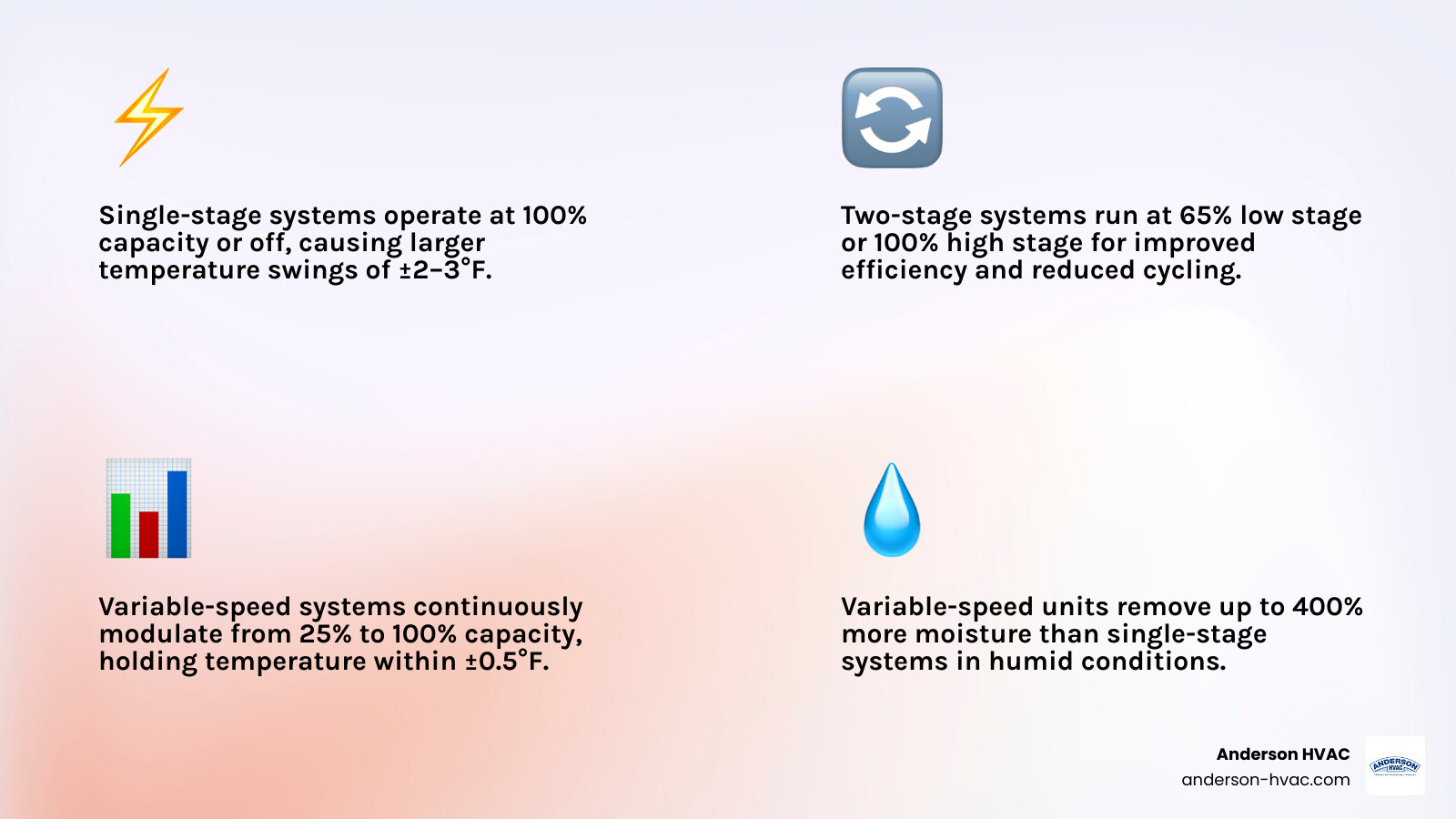
| System Type | Capacity Range | Temperature Swing | Best For |
|---|---|---|---|
| Single-stage | 100% or off | ±2–3°F | Tight budgets, smaller homes |
| Two-stage | 65% or 100% | ±1–2°F | Most homes, value-focused buyers |
| Variable-speed | 25%–100% | ±0.5°F | Humid climates, larger homes, long-term owners |
- Single-stage systems run at full blast or not at all — simple, reliable, and the most affordable upfront.
- Two-stage systems add a lower capacity setting (around 65%), so your system runs longer, quieter, and more efficiently on most days.
- Variable-speed systems adjust output continuously in tiny increments, maintaining near-perfect temperature and removing far more humidity than the other two options.
Many homeowners describe living with a single-stage system as a constant tug-of-war: the unit blasts on, overshoots the target temperature, shuts off, and the cycle repeats — leaving the home feeling either too cold or too warm, and often clammy. Moving up to two-stage or variable-speed technology solves much of that frustration, though each comes with its own tradeoffs in cost and complexity.
Understanding those tradeoffs is exactly what this guide is here to help you with.
Related content about single stage vs two stage vs variable speed options:
Understanding Compressor Operation and Capacity Across HVAC Tiers
To understand how these systems differ, we first need to look inside the outdoor cabinet at the heart of the system: the compressor. The compressor is responsible for pumping refrigerant through your system to transfer heat. How that compressor manages its capacity—meaning how much cooling or heating power it delivers at any given moment—determines the tier of the system.
Traditional systems operate on a binary principle, while modern systems use advanced modulation to match your home’s exact needs. To get a complete picture of how this equipment fits into your overall home comfort strategy, check out our comprehensive resource, The Ultimate Guide to Choosing the Right AC for Your Home.
Single-Stage Systems: The Traditional On-and-Off Cycle
A single-stage compressor is the simplest type of technology. It has only one speed: 100% capacity. When your thermostat detects that the indoor temperature has risen above your setpoint, it sends a signal to the AC to turn on. The system instantly ramps up to full power and stays there until the target temperature is reached, after which it shuts off completely.
This binary on-or-off operation leads to frequent cycling. Because the system is always running at maximum capacity, it cools the home very quickly, shuts down, and then waits for the temperature to rise again. This rapid cycle creates noticeable temperature swings, often fluctuating by several degrees between cycles. It is the HVAC equivalent of driving a car by flooring the gas pedal until you reach the speed limit, slamming on the brakes until you slow down, and then flooring it again.
Two-Stage Systems: The Practical Middle Ground
A two-stage system provides a middle path by offering two distinct levels of compressor operation. Instead of just “on” and “off,” it has a high stage (operating at 100% capacity) and a low stage (typically operating at around 65% capacity).
This operational flexibility allows the system to run on its low stage during mild weather, which accounts for roughly 80% of the cooling season in Northern Utah. Because it runs at a lower capacity, the cooling cycles are longer and much gentler. When outdoor temperatures spike during peak July afternoons in Layton or Roy, the system automatically steps up to the high stage (100%) to keep up with the intense demand. Once the heat wave passes, it drops back down to the quieter, more efficient low stage.
Variable-Speed Systems: Continuous Precision Modulation
Variable-speed systems represent the peak of modern HVAC engineering. Instead of relying on one or two fixed stages, these systems utilize advanced inverter technology to modulate compressor capacity continuously. A variable-speed compressor can operate anywhere from 25% to 100% capacity, adjusting its output in micro-adjustments of just 1% at a time.
Rather than shutting off, a variable-speed system runs almost continuously at very low, whisper-quiet speeds. It calculates the exact amount of cooling needed to offset the heat entering your home and matches that demand precisely. This constant, gentle stream of conditioned air eliminates temperature swings entirely, maintaining your indoor environment within a half-degree of your thermostat setting.
Comparing Single Stage vs Two Stage vs Variable Speed Options for Comfort and Efficiency
When comparing single stage vs two stage vs variable speed options, the differences in daily operation translate directly into measurable differences in energy efficiency (SEER2 ratings), noise levels, and overall comfort.
| Performance Metric | Single-Stage | Two-Stage | Variable-Speed |
|---|---|---|---|
| Typical SEER2 Rating | 13.4 – 15.2 | 15.2 – 18.0 | 18.0 – 22.0+ |
| Temperature Precision | ±2°F to ±3°F | ±1°F to ±2°F | ±0.5°F |
| Humidity Removal | Standard | High | Maximum (Up to 400% more) |
| Noise Level | Loudest (Full blast) | Quiet (Low stage) | Whisper-Quiet (Continuous low) |
| Energy Consumption | Highest | Moderate | Lowest |
Temperature Consistency and Dehumidification Performance
Humidity removal is the quiet hero of home comfort. Even in the relatively dry climate of Northern Utah, indoor humidity can build up from cooking, showering, and daily living, making the air feel sticky or “clammy.”
Because single-stage systems run in short, intense bursts, they often cool the air so quickly that they shut off before they have a chance to pull moisture out of the air. This is why a single-story home in Syracuse or Clearfield might feel cold but damp during a mild summer evening.
Conversely, because two-stage and variable-speed systems run for longer, continuous cycles at lower speeds, they pass indoor air over the cold evaporator coil repeatedly. This extended contact allows for superior humidity removal. In fact, under challenging conditions, a variable-speed system can remove up to 400% more moisture than a standard single-stage unit. Combined with half-degree temperature precision, this master-class dehumidification means you can actually set your thermostat a degree or two higher while enjoying the exact same level of physical comfort.
Noise Levels and Operational Decibels
If your outdoor AC unit is located near a bedroom window, a patio, or a deck in Kaysville or Farmington, noise levels are likely a major priority. Single-stage systems are the loudest because they must start up at 100% power. This sudden startup often produces a loud “clunk” sound, followed by the steady roar of a compressor and fan operating at maximum speed.
Two-stage and variable-speed systems feature “soft starts.” Instead of blasting on at full speed, they gradually ramp up to their operating capacity. When running in their low stages, these units are incredibly quiet—often operating at decibel levels lower than a quiet conversation. Because they run almost continuously at these low speeds, you won’t have to deal with the constant, disruptive cycle of the system turning on and off while you are trying to relax outdoors or sleep at night.
Sizing, Installation Quality, and Equipment Matching
No matter which compressor tier you choose, the system will only perform as well as the quality of its installation. A high-end variable-speed system installed poorly will underperform a basic single-stage system installed correctly.

When upgrading your system, it is vital to look at how the outdoor unit integrates with your indoor equipment and your home’s existing infrastructure. To learn more about how different system designs impact your home, read The Cold Hard Truth About Ductless vs Ducted Cooling Pros and Cons.
Why Proper Sizing Matters More Than Compressor Type
Before any equipment is selected, a professional HVAC contractor must perform a Manual J load calculation. This calculation takes into account your home’s square footage, insulation levels, window orientations, and local climate data to determine the exact system capacity your home requires.
If a system is oversized—a common mistake made by inexperienced installers—it will short-cycle. This means it will turn on, rapidly cool the home, and shut off before completing a proper cycle. Short-cycling completely defeats the benefits of two-stage or variable-speed technology, leading to poor humidity control, uneven temperatures, and premature compressor failure due to excessive wear and tear. Sizing your system accurately is the absolute foundation of long-term performance.
Blower Motor Compatibility and Furnace Matching
Your outdoor air conditioner does not work alone; it relies on your indoor furnace or air handler’s blower motor to circulate air throughout your home. If you are upgrading to a two-stage or variable-speed outdoor unit, your indoor blower motor must be compatible.
To get the full benefits of a variable-speed compressor, you need an indoor blower with an electronically commutated motor (ECM) that can also vary its speed. If your existing furnace is more than 10 to 12 years old, it likely has a fixed-speed blower motor. Trying to pair a high-tech variable-speed AC with an older, single-speed furnace blower will prevent the system from modulating airflow properly, leaving you with a mismatched system that cannot deliver the efficiency or comfort you paid for.
Maintenance, Lifespan, and Long-Term Reliability
Investing in a new heating and cooling system is a long-term commitment. Understanding the maintenance requirements and lifespan expectations of each tier can help you plan for the future.
Lifespan Expectations by System Tier
The most stressful part of an air conditioner’s operation is the startup sequence. Ramping up from a dead stop to 100% capacity draws a massive spike in electricity (startup wattage) and places sudden mechanical stress on the compressor’s internal components.
- Single-stage systems cycle on and off frequently—often 6 to 10 times per hour. This constant cycling accelerates wear and tear, typically resulting in an operational lifespan of 10 to 12 years.
- Two-stage systems experience less wear and tear because they run at a lower, less stressful capacity for most of their cycles, often lasting 12 to 15 years.
- Variable-speed systems utilize soft-start technology and run almost continuously at low speeds, virtually eliminating the mechanical shock of frequent startups. With proper care, these advanced systems can reliably last 15 to 20 years.
Maintenance and Repair Complexity
While variable-speed systems offer incredible efficiency and comfort, they are highly sophisticated machines. They feature advanced inverter boards, electronic expansion valves, and communication sensors that require specialized training to diagnose and repair.
Single-stage systems, by contrast, rely on simple electrical contacts and standard capacitors that are easy to source and straightforward to replace. To protect your investment—regardless of the tier you choose—scheduling annual professional tune-ups is essential. Regular maintenance keeps your system running at peak efficiency, prevents minor issues from turning into major breakdowns, and ensures your manufacturer’s warranty remains valid.
How to Choose: Matching Systems to Your Home and Priorities
Choosing between these options requires balancing your upfront budget against your long-term goals for comfort, energy savings, and how long you plan to stay in your home.
To help manage your energy bills while maximizing your new system’s capabilities, explore our guide on The Definitive Guide to Best Thermostat Strategies for Summer AC Savings.
When to Choose a Two-Stage System as a Compromise
For many families in Northern Utah, a two-stage system is the “Goldilocks” sweet spot. It delivers about 80% of the comfort and humidity-control benefits of a variable-speed system at a much more approachable upfront price point.
Furthermore, two-stage systems are highly forgiving of older ductwork. Variable-speed systems run for very long periods at low airflows. If your home has uninsulated or poorly insulated ductwork running through a hot attic, these long, slow cooling cycles can cause the metal ducts to become very cold. Over time, moisture from the attic air can condense on the cold metal—much like a glass of ice water on a hot summer day. This “duct sweating” can lead to water damage in your ceilings or walls. A two-stage system provides enough airflow to minimize this risk while still offering excellent efficiency upgrades over a single-stage unit.
Climate and Home Size Considerations for Single Stage vs Two Stage vs Variable Speed Options
Your home’s physical layout and our local Northern Utah climate should play a major role in your decision:
- Single-Stage: Excellent for smaller, single-story homes (under 1,200 square feet) with open floor plans, or for rental properties where minimizing upfront capital investment is the primary goal.
- Two-Stage: Ideal for standard-sized, multi-level homes (1,200 to 2,500 square feet) in areas like West Haven, Clinton, or Pleasant View. It helps balance temperatures between floors without requiring complex zoning.
- Variable-Speed: The ultimate choice for large homes (over 2,500 square feet), multi-story layouts, homes with complex zoning systems, or households with severe allergy sufferers who benefit from continuous air filtration.
Evaluating Upfront Investment vs. Long-Term Utility Savings
When comparing quotes, it is important to look at the total cost of ownership rather than just the initial price tag. High-efficiency variable-speed systems can reduce your cooling-related energy consumption by 20% to 50% compared to older, inefficient units.
If you plan to stay in your home for 10, 15, or 20 years, those monthly utility savings will accumulate, eventually offsetting the higher initial investment. However, if you plan to move within the next 3 to 5 years, you may not stay long enough to realize the full financial payback of a top-tier variable-speed system. In that scenario, a single-stage or mid-range two-stage system is often the more practical choice.
For a complete breakdown of how to evaluate these investment options, see our guide on A Practical Guide to Comparing AC Quotes Effectively, or learn about alternative configurations in our Beginners Guide to Mini Split vs Central AC Cost Comparison.
Frequently Asked Questions
Which Home Layouts Benefit Most From Single Stage vs Two Stage vs Variable Speed Options?
Multi-level homes and homes with sprawling, complex layouts benefit the most from two-stage and variable-speed systems. In a multi-story home, heat naturally rises, leaving the upstairs bedrooms uncomfortably hot while the basement or main floor feels freezing. Because single-stage systems blast air quickly and then shut off, they do not run long enough to mix the air throughout the house. The longer, gentler cycles of two-stage and variable-speed systems keep air moving continuously, which helps eliminate hot and cold spots and balances temperatures between floors.
Can I use a variable-speed AC with my existing furnace?
Generally, no—unless your existing furnace already features a compatible variable-speed blower motor (an ECM motor) and a communicating control board. If your furnace is more than a decade old, its blower motor likely only runs at one or two fixed speeds. To get the performance, efficiency, and quiet operation you expect from a variable-speed outdoor AC, you will almost certainly need to upgrade your indoor furnace or air handler at the same time to ensure proper equipment matching.
Do higher-stage systems really improve indoor air quality?
Yes, significantly. Because two-stage and variable-speed systems run for longer, continuous periods at lower speeds, indoor air is constantly being drawn through your return vents and passed through your air filter. This continuous filtration allows your system to capture far more airborne dust, pollen, pet dander, and other particulates than a single-stage system that spends most of its time turned off.
Conclusion
Choosing between single stage vs two stage vs variable speed options is all about finding the right balance of comfort, energy efficiency, and upfront investment for your family. Whether you want the simple reliability of a single-stage system, the practical value of a two-stage unit, or the whisper-quiet, pin-point precision of variable-speed technology, the team at Anderson HVAC is here to help.
As a family-owned business with over 40 years of experience serving North Ogden, Brigham City, Layton, and communities across Northern Utah, we take pride in delivering personalized, honest advice. We will perform a detailed load calculation, inspect your existing ductwork, and help you select the perfect system tailored to your home’s unique needs.
Ready to upgrade your home comfort? Schedule professional AC installation in North Ogden, UT with the experienced team at Anderson HVAC today!

