


Why Your HVAC Warranty Choice Is Just as Important as the System Itself
When choosing an HVAC provider with a warranty on all services, most homeowners focus on the equipment — but the warranty terms your contractor offers can make or break your investment over the next 15 to 20 years.
Here’s a quick summary of what to look for:
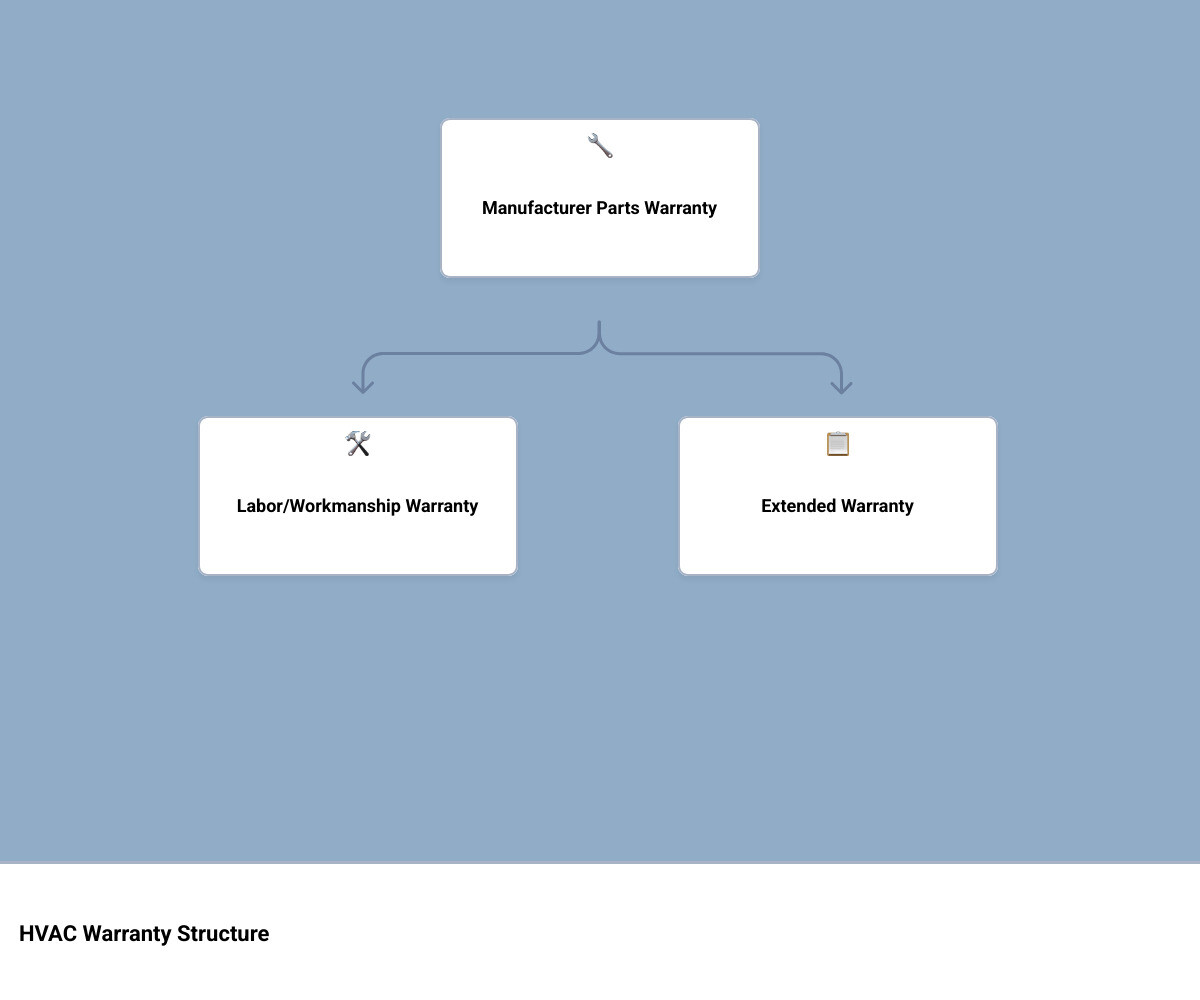
- Manufacturer parts warranty — covers defective components (typically 10 years when registered); does not cover labor
- Labor/workmanship warranty — covers the contractor’s installation work; should be at least 1–5 years in writing
- Extended warranty — optional add-on that can extend parts and labor coverage beyond the base period
- Home warranty — a separate annual plan covering multiple appliances; often caps HVAC payouts well below full replacement cost
The biggest gap most homeowners miss? A 10-year parts warranty means nothing if the contractor only offers 90 days of labor coverage. A compressor failure in year seven still leaves you paying for the technician’s time — which can run into the hundreds of dollars — even if the part itself is free.
In Northern Utah, where winters hit hard and summers push cooling systems to their limits, that gap matters more than most homeowners realize. Understanding how warranties are structured — and knowing what questions to ask before you sign anything — is the difference between genuine peace of mind and an expensive surprise.
This guide walks you through everything: warranty types, contractor vetting, red flags, maintenance requirements, and how to file a claim if something goes wrong.
Understanding the Different Types of HVAC Warranties
Navigating heating and cooling warranties can feel like trying to program a smart thermostat without the manual. To protect your home and your wallet, you must understand that a “warranty” is not a single, all-encompassing shield. Instead, it is a combination of different coverages provided by different entities.
When you invest in a new system, you will encounter several distinct layers of protection: the manufacturer’s warranty, the registered parts warranty, the contractor’s installation warranty, and potentially an extended warranty or labor coverage plan. Knowing who is responsible for what will save you immense stress down the road. For a deeper look at the installation side of things, check out The Ultimate Guide to What to Expect During AC Replacement.
Manufacturer Parts Warranties vs. Labor Coverage
The most common misunderstanding in the HVAC industry centers on the difference between parts coverage and labor coverage.
A standard manufacturer parts warranty comes directly from the brand that built your furnace, heat pump, or air conditioner. This warranty guarantees that if a component fails due to a factory defect within a specified timeframe, the manufacturer will provide a replacement part at no cost. However, this is strictly a parts-only policy. It covers the physical piece of metal or plastic — such as a new compressor or heat exchanger — but it completely excludes the cost of the diagnostic visit, the shipping fees for the part, and the physical labor required to cut out the broken piece and solder in the new one.
To get the full benefit of this manufacturer protection, you must pay attention to the registration deadline.
- 5-Year Base Warranty: If you fail to register your new equipment with the manufacturer within a strict window (typically 60 to 90 days from the installation date), your coverage automatically drops to a basic 5-year parts warranty.
- 10-Year Registered Warranty: If you or your contractor registers the equipment online within the deadline, that parts coverage is instantly extended to 10 years.
While ten years of parts coverage sounds fantastic, the labor required to replace major components like a compressor or an evaporator coil can be incredibly intensive. Without separate labor coverage, you could still face a massive bill for a technician’s time, even though the manufacturer handed over the replacement part for free.
Why Choosing an HVAC Provider with a Warranty on all Services Matters
This is where choosing an HVAC provider with a warranty on all services becomes a game-changer for homeowners in Northern Utah. A reputable contractor does not just pass off the manufacturer’s paperwork and call it a day; they back their own handiwork with a robust workmanship guarantee or service warranty.
An installation or service warranty is provided directly by the HVAC company. It covers the labor, diagnostic fees, and secondary materials (like refrigerant, solder, and electrical fittings) required to fix issues stemming from the installation or repair process.
If your system experiences an issue because a joint was not sealed correctly or a wire was loose, a provider who offers a warranty on all services will return to your home, diagnose the issue, reclaim and replace the refrigerant, and perform the repair without charging you a single dime. This level of complete protection ensures that you are not left holding the bag for expensive diagnostic fees or costly refrigerant top-offs due to an installer’s oversight.
Key Steps in Choosing an HVAC Provider with a Warranty on all Services
Finding a contractor who promises a warranty is easy; finding one who actually has the credentials, stability, and integrity to honor that warranty over the next decade requires a bit of detective work. Proper contractor vetting is the most critical step in protecting your home comfort system.

Verifying Licensing, Insurance, and Technical Certifications
Before you allow any technician to open up your furnace or hook up gauges to your air conditioner, you must verify their professional credentials. In Utah, operating without the proper legal and technical baselines is a recipe for a voided warranty and property damage.
- State Licensing: Ensure the company holds an active contractor’s license in good standing with the Utah Division of Occupational and Professional Licensing (DOPL). An active license proves the business met state competency and testing standards.
- General Liability Insurance: A professional HVAC provider should carry substantial general liability insurance (ideally at least $1 million). This protects your home and property if an accident occurs during installation or repair.
- EPA 608 Certification: This is a mandatory federal certification required by the Environmental Protection Agency for any technician who handles, maintains, or disposes of refrigerants. Working with an uncertified technician is illegal and instantly voids manufacturer warranties.
- NATE Certification: North American Technician Excellence (NATE) is the gold standard for voluntary technical certification in the HVAC industry. Technicians who carry NATE patches on their uniforms have passed rigorous, specialized exams testing their real-world diagnostic and installation knowledge.
Red Flags to Avoid When Evaluating Service Warranties
When you are comparing local providers, keep your eyes open for these warning signs that indicate a contractor might cut corners or leave you stranded when you try to make a warranty claim:
- Verbal Promises Only: If a comfort advisor tells you, “Don’t worry, we’ll take care of any issues for the next five years,” but that promise is nowhere to be found in the written contract, assume it does not exist. Every service and labor guarantee must be clearly spelled out in writing.
- Offering to Skip Permits: If a contractor suggests bypassing local building permits to “save you money,” run the other way. Unpermitted HVAC installations are code violations, can complicate future home sales, and frequently give manufacturers a legal reason to void your equipment warranty entirely.
- Rule-of-Thumb Sizing: A contractor who estimates the size of your new system based solely on your home’s square footage — or simply copies the size of your old unit — is cutting major corners. Accurate sizing requires a scientific calculation.
- High-Pressure Sales Tactics: If a company pressures you to sign a contract immediately or offers a special price that is “only valid for today,” they are trying to prevent you from researching their reputation and reading their warranty terms closely.
How Proper Installation and Maintenance Protect Your Warranty
Many homeowners do not realize that an HVAC warranty is a two-way street. Manufacturers and contractors provide these protections under the assumption that the system is installed correctly and maintained professionally. If either of these conditions is neglected, your coverage can vanish instantly.
The Critical Role of Proper System Sizing and Installation Quality
An HVAC system’s lifespan and its warranty validity begin on day one. To perform reliably, a system must be sized perfectly for your home’s unique layout, insulation level, window orientations, and local climate. This requires a professional Manual J load calculation.
If a contractor installs an oversized system, the unit will experience a phenomenon known as “short-cycling.” It will turn on, rapidly blast cold or hot air into the home, satisfy the thermostat quickly, and shut off before completing a full cycle. This constant starting and stopping places immense stress on the compressor and electrical components, leading to premature failure. If a manufacturer’s inspector determines that a major component failed because the system was improperly sized or installed with restrictive ductwork, they can deny your warranty claim, leaving you responsible for the replacement.
To learn more about the differences in maintaining various system types, explore The Great Debate of Heat Pump vs AC Maintenance.
The Critical Role of Professional Annual Maintenance
Once your system is properly installed, keeping that warranty active requires consistent, documented upkeep. Just like a new car requires regular oil changes to keep its factory warranty valid, your heating and cooling systems require professional care.
- Annual Tune-Ups: Most major manufacturers explicitly state in their warranty terms that the equipment must be serviced annually by a licensed professional.
- Detailed Record-Keeping: If a major component like a heat exchanger cracks in year eight, the manufacturer may request copies of your annual maintenance invoices before shipping out a replacement part. If you cannot prove the system was serviced every year, your claim can be denied.
- Preventative Tasks: Regular professional service prevents minor issues — like a dirty flame sensor or a clogged condensate drain — from turning into catastrophic failures.
To make sure your system is ready for the changing seasons, timing is crucial. Read more in our guide: Timing is Everything for Your Heat Pump Service.
Avoiding Common Actions That Void Your Coverage
Beyond skipping your annual service, there are several other common mistakes that can completely void your heating and cooling coverage:
- Uncertified DIY Repairs: Attempting to fix your own air conditioner or furnace to save a few bucks is highly risky. If a manufacturer or contractor finds non-approved, third-party parts inside the system, or evidence of uncertified repair attempts, your warranty is void.
- Neglecting Air Filters: Allowing a system to run with a heavily clogged air filter restricts airflow, causing the indoor coil to freeze or the furnace to overheat. Damage caused by restricted airflow is classified as homeowner neglect and is not covered under warranty.
- Failure to Register: As mentioned earlier, forgetting to register your new system online within the designated 60-to-90-day window cuts your parts protection in half.
- Using Incorrect Thermostat Settings: Believe it or not, rapid tampering with your thermostat can cause system strain. For tips on managing your system efficiently, see The Definitive Guide to Best Thermostat Strategies for Summer AC Savings.
Comparing Quotes and Understanding Warranty Exclusions
When you collect quotes from multiple HVAC providers across Northern Utah, comparing them on the bottom-line price alone is a major mistake. You must compare the complete value of the package, which includes the specific equipment, the installation standards, and the long-term warranty protections.
Deciphering the Fine Print: Equipment, Labor, and Home Warranties
To help you understand the landscape of home comfort protection, here is a breakdown of how different warranty types compare:
| Feature | Manufacturer Parts Warranty | Contractor Labor Warranty | Typical Home Warranty Plan |
|---|---|---|---|
| Who Provides It? | Equipment Manufacturer (e.g., Carrier, Trane) | Local HVAC Contractor | Third-Party Insurance/Warranty Company |
| What is Covered? | Defective physical parts and components | Physical labor, diagnostic fees, installation errors | General wear-and-tear repairs for multiple appliances |
| Refrigerant Covered? | No | Yes (by reputable providers) | Rarely (often subject to strict limits) |
| Typical Duration | 5 years (unregistered) / 10 years (registered) | 1 to 10 years (varies by contractor) | Annual renewal required |
| Service Fees | None (but you pay for labor/diagnostics) | None (during the warranty period) | Trade service call fee per visit |
| Coverage Caps | No cap on qualifying defective parts | No cap on covered workmanship repairs | Often capped at a low maximum per year |
Common Exclusions and Limitations in HVAC Warranties
Even the most comprehensive warranties have rules, boundaries, and exclusions. Before signing a contract, read the fine print to identify these common limitations:
- Wear and Tear: Warranties cover factory defects and installation errors, not standard wear and tear. Consumable items like air filters, humidifier pads, and fan belts are never covered.
- Acts of God: Damage caused by extreme weather events, lightning strikes, floods, pests (such as mice chewing through wiring), or electrical power surges is typically excluded. These issues should be filed under your homeowner’s insurance policy rather than your HVAC warranty.
- Pre-Existing Conditions: If you purchase a home warranty plan, it will not cover pre-existing mechanical issues that were present before the policy went into effect.
- Transferability Rules: If you sell your home, some manufacturer warranties drop down to a 5-year term for the new owner, while others allow a full transfer if a fee is paid within a specific timeframe after the home sale.
What to Ask Before Choosing an HVAC Provider with a Warranty on all Services
When you are interviewing prospective HVAC companies in communities like Layton, Kaysville, or Syracuse, print out this checklist of questions to ensure you are getting a reliable, written warranty:
- “Is the labor warranty provided directly by your company, or is it outsourced to a third-party administrator?” (In-house warranties are always processed faster and with less red tape.)
- “Does your labor warranty cover diagnostic fees, trip charges, and refrigerant if a covered part fails?”
- “Who is responsible for registering the equipment with the manufacturer to secure the 10-year parts warranty — you or me?”
- “Will your company pull all required municipal building permits and coordinate the final inspection?”
- “What is your process for handling emergency warranty service on weekends or holidays?”
- “Are there any written change-order clauses in our contract to protect me from unexpected fees mid-project?”
Frequently Asked Questions About HVAC Warranties
How do I know if my current HVAC system is still under warranty?
To find out if your heating or cooling system is still covered, locate the metal rating plate on the outdoor condenser or the indoor furnace cabinet. Write down the brand name, model number, and unique serial number.
With this information, visit the manufacturer’s official website and look for their “Warranty Lookup” tool. Entering your serial number will reveal the manufacture date, registration status, and remaining coverage. If you cannot find the tool online, call a trusted local HVAC provider; they can easily look up the warranty details on their dealer portal.
What is the difference between a manufacturer warranty and a home warranty?
A manufacturer warranty is built into the purchase of your specific HVAC equipment and covers factory-defective parts only. It does not cover wear and tear, labor, or other home systems.
A home warranty is an optional, paid annual service contract that covers repairs and replacements for a wide range of household appliances and systems (like plumbing, electrical, and HVAC) due to normal wear and tear. However, home warranties require you to pay a service fee for every technician visit and often carry strict coverage limits that may not cover the full cost of a major system replacement.
What steps should I take to file a warranty claim smoothly?
If your system stops working, follow these steps to ensure a smooth claim process:
- Gather Your Records: Locate your original installation invoice, system serial numbers, and proof of annual professional maintenance.
- Contact a Certified Technician: Call a licensed HVAC provider who is authorized to service your equipment brand.
- Request a Diagnostic Report: The technician must diagnose the issue and write a detailed report explaining which part failed and why.
- Submit the Claim: The authorized contractor will submit the diagnostic report and part request directly to the manufacturer to secure the replacement component under warranty.
Secure Your Peace of Mind with Northern Utah’s Trusted Comfort Partners
At the end of the day, choosing an HVAC provider with a warranty on all services is about securing long-term peace of mind for your family. Your heating and cooling systems are some of the most significant investments you will ever make for your home. Protecting that investment requires more than just picking a high-quality equipment brand — it requires partnering with a local team that stands firmly behind every duct connection, electrical termination, and system calibration.
At Anderson HVAC, we have spent over 40 years keeping our neighbors comfortable across Northern Utah. From our home base in North Ogden to the communities of Brigham City, Clearfield, Clinton, Farmington, Farr West, Harrisville, Huntsville, Kaysville, Layton, Morgan, Mountain Green, Plain City, Pleasant View, Riverdale, Roy, South Ogden, Syracuse, Uintah, West Haven, and West Point, we take pride in delivering exceptional, individualized service that exceeds expectations.
As a family-owned and operated business, we treat your home’s comfort as if it were our own. We don’t believe in cutting corners, skipping permits, or making empty verbal promises. When you work with us, you get clear communication, professional installations backed by Manual J load calculations, and honest, comprehensive warranties in writing.
Ready to experience comfort service built on trust, integrity, and four decades of local experience? To learn more about selecting the right system for your home, explore our Anderson HVAC Energy Efficient Review 101.
To keep your current system running efficiently and protect your active warranty coverage, contact our friendly team today to schedule your professional annual tune-up through our Anderson HVAC Maintenance Services in North Ogden. We are here to keep your home comfortable through every Northern Utah season!

