


Why the Benefits of Regular HVAC Maintenance in High Desert Weather Matter More Than You Think
The benefits of regular HVAC maintenance in high desert weather are significant — and in Northern Utah, they can mean the difference between a system that lasts 15 years and one that fails in 8.
Here is a quick summary of the key benefits:
- Lower energy bills – Regular maintenance can reduce energy costs by 15-20% by keeping coils clean and airflow unrestricted
- Longer system life – Well-maintained systems last 5-7 years longer than neglected ones in harsh desert conditions
- Fewer emergency breakdowns – Catching small issues early prevents costly mid-summer or mid-winter failures
- Better indoor air quality – Clean filters and ducts reduce dust, allergens, and fine particles common in high desert air
- Warranty protection – Most manufacturers require documented professional service to keep coverage valid
- More consistent comfort – A tuned system handles extreme temperature swings without short cycling or weak airflow
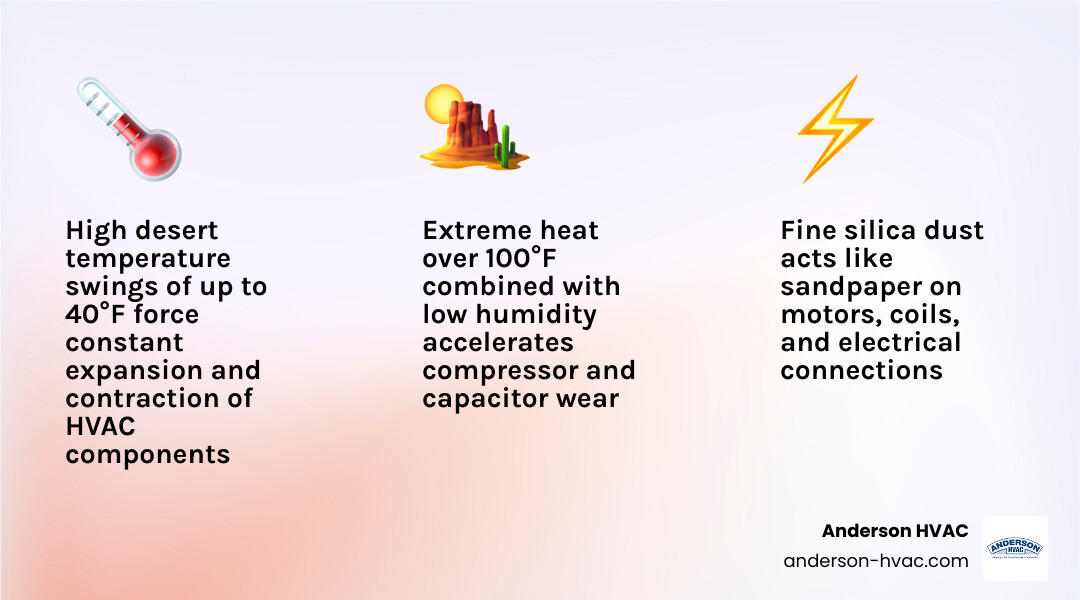
Living in Northern Utah means your HVAC system faces some of the harshest conditions any home comfort system can endure. Summer temperatures push past 100°F. Winter nights drop below freezing. And in between, daily temperature swings of up to 40 degrees force your system to constantly adjust — expanding, contracting, and cycling on and off in ways that quietly wear down motors, electrical connections, and refrigerant lines over time.
Add fine desert dust and silica particles to the mix, and you have an environment that acts like sandpaper on every moving part inside your system. Most standard national HVAC advice simply was not written with this kind of climate stress in mind.
That is exactly why homeowners across North Ogden and Northern Utah need a maintenance strategy built for high desert realities — not one-size-fits-all recommendations.
Similar topics to benefits of regular hvac maintenance in high desert weather:
Why High Desert Climates Demand Specialized HVAC Care

High desert environments like the Wasatch Front and surrounding valleys are uniquely demanding. The combination of high altitude, low humidity, intense solar radiation, and fine airborne silt creates a perfect storm of wear and tear on mechanical systems.
Unlike moderate, humid climates where air conditioning units run at a steady, predictable pace, high desert systems must cope with rapid, dramatic shifts in demand. During the shoulder seasons, your system might transition from heating your home in the early morning to cooling it by mid-afternoon. This constant shifting is known as thermal cycling, and it puts immense physical stress on your equipment.
Understanding how often should you service your hvac is the first step in protecting your investment. In Northern Utah, waiting until something breaks is a recipe for discomfort and expensive emergency repairs.
The Sandpaper Effect of Desert Dust on Moving Parts
One of the most insidious threats to a high desert HVAC system is the fine silica dust that blankets our region. When dry winds blow across the valley, microscopic dust particles find their way into every crack and crevice of your outdoor condenser unit and your indoor air handler.
Inside your system, this dust acts like fine-grit sandpaper. As the blower motor spins and the outdoor fan runs, dust particles mix with the lubricating grease in the motor bearings, turning a helpful lubricant into an abrasive paste. This increases friction, causes motors to run hotter, and ultimately leads to premature motor burnouts.
Dust also coats the delicate aluminum fins of your outdoor coils. These fins are designed to release heat from your home into the outdoor air. When they are caked in dirt, they act as an insulating blanket, trapping heat inside the system and forcing the compressor to work up to 30% harder to cool your home.
To prevent this destructive wear, there are specific tasks that must be performed during a seasonal tune-up. To see exactly what needs to be addressed, read our guide on everything your hvac tech should check during a tune-up.
Extreme Temperature Swings and Thermal Cycling
In high desert zones, day-to-night temperature swings of 30 to 40 degrees are completely normal. While this makes for pleasant summer evenings, it is incredibly tough on your heating and cooling equipment.
This rapid temperature fluctuation causes the metal components inside your HVAC system to expand and contract rapidly. Over time, this constant “thermal cycling” acts like bending a metal paperclip back and forth. It loosens electrical connections, stresses soldered joints, and can eventually cause tiny cracks in copper refrigerant lines. Loose electrical connections are particularly dangerous because they increase resistance, which can burn out expensive capacitors or even damage your compressor.
For homes utilizing heat pumps, this year-round operational stress is even more pronounced. Because heat pumps provide both heating and cooling, they rarely get a true “off-season.” You can explore how this constant operation impacts your system in the great debate of heat pump vs ac maintenance.
The Financial and Operational Benefits of Regular HVAC Maintenance in High Desert Weather
To put the importance of preventive care into perspective, let’s look at how a regularly maintained system compares to one that is neglected in our local climate:
| Feature/Metric | Well-Maintained High Desert HVAC | Neglected High Desert HVAC |
|---|---|---|
| Average Lifespan | 12 to 15+ years | 8 to 10 years |
| Energy Efficiency | Operates at original SEER/AFUE ratings | Loses 5% to 10% efficiency annually |
| Airflow Quality | Clean, strong, consistent | Weak, dusty, uneven |
| Unplanned Breakdowns | Extremely rare (caught during seasonal checks) | Common during extreme July heatwaves or January freezes |
| Manufacturer Warranty | Fully compliant and active | Often voided due to lack of professional records |
Investing in seasonal maintenance is not just about avoiding a breakdown; it is a smart financial strategy. Knowing the ins and outs of what an hvac maintenance visit includes helps you understand why these proactive visits deliver such high returns on your home comfort investment.
Crucial benefits of regular hvac maintenance in high desert weather for Air Quality
Our dry, high desert air carries a high concentration of pollen, dust, and outdoor allergens. During the dry summer months, windstorms kick up fine soil particles, and winter inversions trap particulate matter close to the ground. Without a well-maintained filtration and ventilation system, your home simply recirculates these pollutants.
Regular maintenance ensures that your system’s entire air path — from the return vents and filters to the evaporator coils and supply ducts — remains clean and free of debris. When dust is allowed to accumulate on a damp indoor evaporator coil, it can combine with the natural condensation to create a muddy sludge that restricts airflow and becomes a breeding ground for mold and bacteria. Keep your system running clean by understanding why timing is everything for your heat pump service.
How to secure the benefits of regular hvac maintenance in high desert weather for your warranty
A brand-new heating and cooling system is a major investment. To protect homeowners, manufacturers offer robust warranties that cover the cost of major parts, like compressors and heat exchangers, if they fail prematurely.
However, there is a catch that many homeowners overlook: almost all manufacturer warranties require annual professional maintenance to remain valid.
If your compressor fails in year five, the manufacturer will likely ask for service records proving the system was maintained by a licensed professional. If you cannot provide those records, your claim may be denied, leaving you to cover the replacement out of pocket. Regular maintenance visits from a trusted team like us keep your warranty intact and protect you from unexpected expenses.
Maximizing Energy Efficiency and Lowering Utility Bills
When your HVAC system is neglected in a high desert climate, your utility bills will steadily climb. A system with dirty coils, a clogged filter, or a slightly low refrigerant charge has to run longer and work harder to achieve the temperature set on your thermostat.
A 10% loss in refrigerant can reduce your system’s cooling capacity by up to 20%, forcing it to run continuously during a hot July afternoon. Similarly, dirty coils can reduce overall system efficiency by up to 30%. By scheduling regular tune-ups, you ensure your system maintains its high SEER (Seasonal Energy Efficiency Ratio) rating, keeping your monthly energy bills as low as possible. You can read more about how to prevent costly summer breakdowns with a professional ac tune-up.
Extending System Lifespan in Harsh Arid Environments
Replacing an HVAC system prematurely is an expense every homeowner wants to avoid. In mild climates, a neglected system might limp along for a decade, but the extreme heat and cold of Northern Utah will quickly push a neglected unit to its breaking point.
The compressor is the heart of your air conditioner or heat pump. If it is forced to operate under high pressure due to dirty coils or restricted airflow, it will overheat and eventually fail. Similarly, the capacitors — which act as start-up batteries for your system’s motors — are highly sensitive to the extreme attic and outdoor temperatures of summer. Regular maintenance catches weak capacitors and dirty components before they cause a cascade of mechanical failures, extending your system’s life by 5 to 7 years. Learn more about protecting your system’s longevity in our guide to the secret to a long living heat pump.
Seasonal Maintenance Strategies for Four-Season Desert Climates
Because Northern Utah experiences four distinct and extreme seasons, your maintenance strategy must be split into two focused phases: spring preparation for cooling, and fall preparation for heating. Trying to do both in a single annual visit often leaves your system vulnerable during seasonal transitions.
Planning your service ahead of time is key. Check out our advice on the best time to schedule your annual ac tune-up to stay ahead of the extreme weather.
Spring AC Preparation for Scorching Summers
Before the first triple-digit day of summer arrives, your air conditioning system needs a thorough check-up. Spring maintenance focuses on clearing away the debris accumulated over the winter, optimizing heat transfer, and ensuring the electrical systems can handle the high-demand summer months.
During a spring tune-up, a professional technician will:
- Thoroughly wash the condenser coils to remove dirt and dust.
- Test the system’s capacitors to ensure they are within factory specifications.
- Check the refrigerant charge to ensure there are no slow leaks.
- Clear and flush the condensate drain line to prevent water damage and indoor humidity spikes.
Taking these steps early prevents system strain when summer heatwaves hit. To avoid issues before the cooling season starts, read how to stop heat pump headaches before they start.
Fall Heating Prep for Freezing Desert Nights
High desert winter nights are incredibly cold, often dropping well below freezing. Your heating system — whether it is a traditional gas furnace or an electric heat pump — must be ready to work reliably through the night.
Fall heating maintenance focuses on safety, airflow, and operational reliability:
- Heat Exchanger Inspection: Checking for cracks that could allow dangerous carbon monoxide to enter your home.
- Burner and Ignition Cleaning: Ensuring clean combustion and reliable start-ups.
- Defrost Cycle Testing: For heat pumps, verifying that the system can clear ice from the outdoor coils during freezing weather.
- Electrical Connections: Tightening all terminals that may have loosened during summer thermal cycling.
Don’t wait until the first snow to test your heating system. Prepare your home with these don’t get cold feet with these heat pump maintenance tips.
Frequently Asked Questions About Desert HVAC Care
How often should I change my air filter in a high desert climate?
In our high desert climate, you should check your air filter every 30 days. While national guidelines often suggest changing filters every 90 days, the high volume of fine dust, pollen, and wind-blown debris in Northern Utah means filters clog much faster here.
If you have pets, allergies, or live near developing residential areas in West Haven or Syracuse where construction dust is common, you will likely need to replace your filter monthly during peak heating and cooling seasons. Always use a high-quality filter with an appropriate MERV rating (usually between MERV 8 and MERV 11) to ensure excellent filtration without restricting vital airflow to your system.
What are the signs my desert HVAC system needs an immediate tune-up?
Keep an eye out for these warning signs that indicate your system is struggling:
- Weak or uneven airflow from your supply registers.
- Strange noises, such as squealing fan belts, grinding motor bearings, or clicking electrical components.
- Short cycling, where the system turns on and off every few minutes without completing a full cooling or heating cycle.
- An unexplained spike in your monthly utility bills.
- Frequent thermostat adjustments required to stay comfortable.
Can I perform desert HVAC maintenance myself?
While there are several important tasks you can handle as a homeowner, deep technical maintenance must be left to licensed professionals.
What you can do:
- Check and replace air filters monthly.
- Maintain at least two feet of clear space around your outdoor condenser unit by trimming weeds, shrubs, and grass.
- Gently rinse the outdoor condenser coils with a garden hose (never use a pressure washer, as it can bend the delicate aluminum fins).
What requires a professional:
- Testing electrical components, capacitors, and contactors.
- Checking and adjusting refrigerant levels (handling refrigerant requires EPA certification).
- Cleaning and adjusting gas burners, ignition systems, and inspecting the heat exchanger.
- Calibrating thermostats and measuring airflow pressures.
Conclusion
Your home comfort system works incredibly hard to keep you safe and comfortable through Northern Utah’s extreme high desert climate. By investing in regular, professional HVAC maintenance, you protect your system from the destructive sandpaper effect of desert dust, keep your energy bills low, and ensure your system is ready to handle whatever the weather throws our way.
At Anderson HVAC, we have been helping our neighbors throughout North Ogden, Layton, Kaysville, and the surrounding Northern Utah communities stay comfortable for over 40 years. As a family-owned business, we are committed to delivering honest, high-quality, and personalized service that exceeds your expectations.
Don’t wait for the next extreme weather shift to find out if your system is up to the task. Schedule your professional HVAC maintenance in North Ogden, UT today and experience the peace of mind that comes from working with the local comfort experts.

