


When Your AC Compressor Quits: What Northern Utah Homeowners Need to Know
Why your AC compressor fails and what to do is one of the most urgent questions a homeowner can face — especially on a scorching Utah summer day when the house just won’t cool down.
Here’s a quick answer:
Top reasons your AC compressor fails:
- Low or leaking refrigerant
- Dirty condenser coils causing overheating
- Electrical issues like power surges or faulty wiring
- Lack of lubrication
- Normal wear and tear over time
What to do right now:
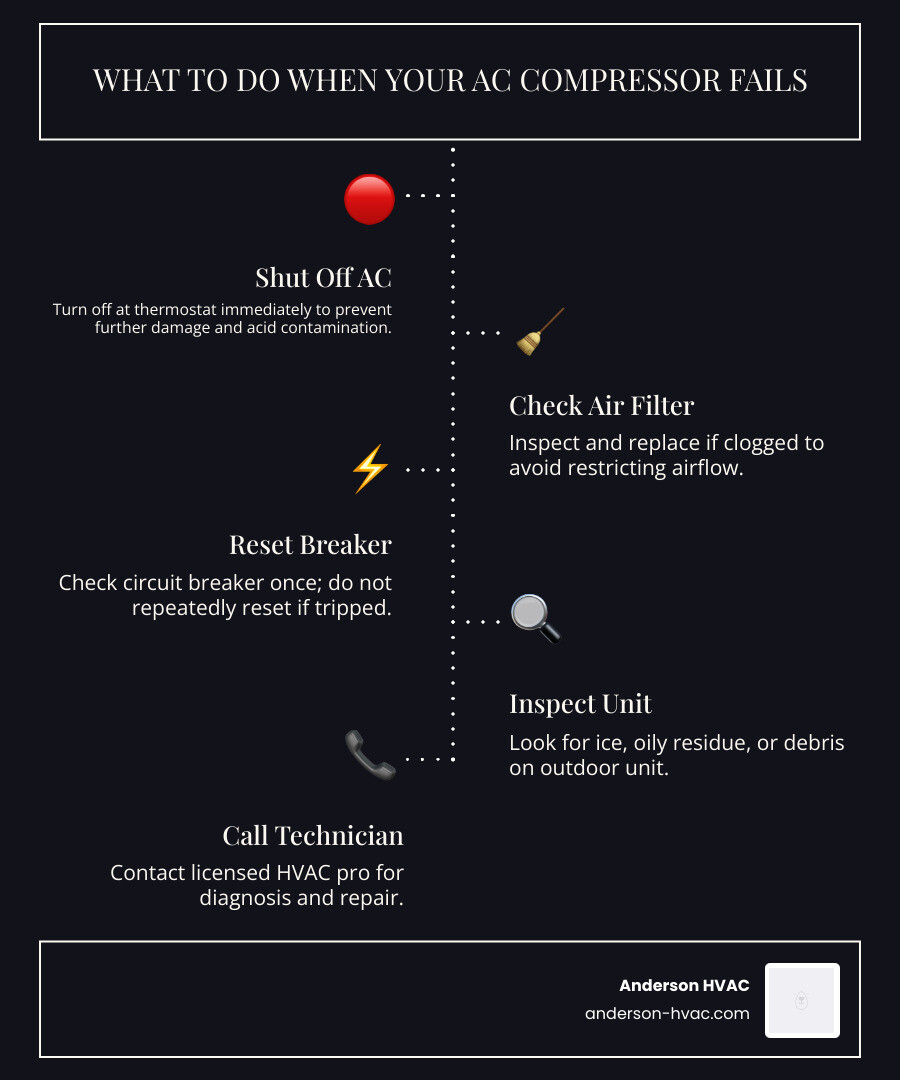
- Turn off your AC at the thermostat to prevent further damage
- Check your air filter and circuit breaker first
- Look for oily residue or ice buildup on the outdoor unit
- Do not repeatedly reset a tripped breaker
- Call a licensed HVAC technician for a proper diagnosis
The compressor is the heart of your entire cooling system. When it stops working, so does your home’s ability to remove heat. And unlike a clogged filter or a tripped breaker, a failing compressor is not something you can simply ignore — the longer it runs in a damaged state, the worse the outcome can be for the rest of your system.
Whether you’re in North Ogden, Layton, or anywhere across Northern Utah, understanding what went wrong — and what your options are — can save you from a much bigger repair bill down the road.
Understanding the Role of the AC Compressor
To understand why your air conditioner is suddenly acting like a glorified fan, we first have to look at what the compressor actually does. We often call the compressor the “heart” of the HVAC system, and for good reason. Just as your heart pumps blood to keep your body functioning, the compressor pumps refrigerant throughout your AC system to keep your home cool.
The cooling process is essentially a giant game of “hot potato” with heat. Your indoor unit (the evaporator) absorbs heat from your indoor air. The refrigerant carries that heat outside to the condenser unit. However, for the refrigerant to actually release that heat into the Utah summer air, it needs to be much hotter than the air outside.
That is where the compressor comes in. Located in your outdoor unit, the compressor takes low-pressure refrigerant gas and “squeezes” it. This compression raises both the pressure and the temperature of the gas, turning it into a high-pressure, high-temperature vapor. Because it is now hotter than the outside air, the heat can naturally transfer out of the coils and into the environment.
Without a functioning compressor, the refrigerant cannot circulate, and the heat exchange process grinds to a halt. If you are noticing that your system is running but the air coming out of the vents feels like a lukewarm breeze, the compressor might be struggling to fulfill its role. For residents dealing with these issues, getting a professional eye on the situation is vital. Don’t Lose Your Cool With Farmington AC Repair provides more insight into how these systems are maintained in our local climate.
Why Your AC Compressor Fails and What to Do Next
When a compressor fails, it rarely happens in a vacuum. Usually, it is the victim of another problem within the system that was neglected. In our 40+ years of serving Northern Utah, we have seen that compressors are incredibly durable—often designed to last 10 to 15 years—but they aren’t invincible.
Common signs that your compressor is on its way out include:
- Warm Air from Vents: The most obvious sign. If the heart isn’t pumping, the cooling isn’t happening.
- Strange Noises: If you hear grinding, clanking, or a loud “thumping” when the outdoor unit starts, it could mean internal components are breaking apart.
- Tripped Breakers: A failing compressor often “hard starts,” drawing massive amounts of electricity that trip your home’s circuit breaker.
- Reduced Airflow: While this can be a duct issue, a struggling compressor often leads to a noticeable drop in system performance.
If you suspect your system is failing, it is important to act quickly. For neighbors in the Clearfield area, we recommend checking out AC Repair In Clearfield UT A Breath Of Fresh Air For Your Car And Home for localized tips on managing system breakdowns.
Immediate Steps for Why Your AC Compressor Fails and What to Do
The moment you realize something is wrong, your first priority is protection. If you continue to run an AC system with a failing compressor, you risk a “terminal failure” known as acid burnout. This happens when the motor insulation inside the compressor melts, creating a chemical reaction that turns the refrigerant and oil into a corrosive acid. This acid then travels through your entire system, potentially ruining the indoor coils and lineset, turning a single part replacement into a total system loss.
Immediate Action Checklist:
- Shut it down: Turn the thermostat to “Off.” Do not just turn up the temperature; ensure the cooling cycle is fully stopped.
- Check the power: See if the outdoor unit has power. If the breaker is tripped, you can reset it once. If it trips again immediately, stop. This is a safety feature telling you there is a major electrical short or a seized motor.
- Check the thermostat: Ensure it hasn’t accidentally been switched to “Fan Only” or that the batteries haven’t died.
For those in Kaysville, taking these steps early is essential to avoid the need for more extensive work. You can find more details here: Why Your Kaysville Home Needs Professional Ductless AC Repair Right Now.
Safe Troubleshooting for Why Your AC Compressor Fails and What to Do
Before you assume the worst (and the most expensive), there are a few safe things you can check at home. Sometimes, the compressor isn’t actually broken; it’s just being prevented from starting by a smaller, cheaper component.
- The Air Filter: A clogged filter restricts airflow. This can cause the evaporator coils to freeze, which sends liquid refrigerant back to the compressor (a process called “slugging”). Compressors are designed to squeeze gas, not liquid. Trying to compress liquid can shatter the internal valves.
- The Outdoor Unit: Take a look at your outdoor condenser. Is it buried in tall grass, weeds, or covered in “cottonwood fluff” (a common sight in Northern Utah)? If the unit can’t breathe, the compressor will overheat and shut down via its internal thermal overload switch.
- Visual Inspection: Look for oily residue on the base of the unit or on the copper lines. Refrigerant carries oil for the compressor; if you see oil, you likely have a refrigerant leak, which is a leading cause of compressor burnout.
If you are in the Farr West area and want to narrow down the problem, Farr West AC Repair Finding The Best And Most Affordable Services is a great resource for local troubleshooting.
Top Causes of AC Compressor Failure
In the HVAC world, we often perform what we call a “compressor autopsy.” When we replace a failed unit, we look at why it died. More often than not, the compressor didn’t just “give up the ghost” because of its age; it was “killed” by an outside factor.
- Dirty Condenser Coils: This is the #1 killer. When dust and grime build up on the outdoor coils, the heat can’t escape. The compressor has to work twice as hard to move that heat, leading to extreme temperatures that cook the internal lubrication oil.
- Refrigerant Leaks: Refrigerant is not fuel; it doesn’t get “used up.” If it’s low, there’s a leak. Low refrigerant means the compressor has to run longer to cool the home, and it also means there isn’t enough oil circulating to keep the moving parts lubricated.
- Electrical Issues: Power surges from Utah’s summer storms or even simple wear on the contactors (the switches that start the unit) can cause “pitting.” This leads to voltage imbalances that can burn out the motor windings inside the compressor.
- Incorrect Refrigerant Charge: If a technician (or a DIY-er) adds too much or the wrong type of refrigerant, the pressure becomes too high for the compressor to handle, leading to premature failure.
Keeping your system healthy in Brigham City requires a proactive approach. Brigham City AC Repair Keeping Your Home Chilled And Your Wallet Full offers excellent advice on avoiding these common pitfalls.
The Impact of Dirty Coils and Low Refrigerant
When coils are dirty or refrigerant is low, the system enters a vicious cycle. The compressor gets hotter and hotter, causing the oil to undergo “carbonization.” This is similar to what happens when you leave a pan on the stove too long—the oil turns into a thick, black sludge. This sludge clogs the small valves inside the compressor, eventually causing it to seize up entirely.
Furthermore, moisture entering a system through a small leak can mix with the oil to create acid. This acid literally eats away at the motor’s copper windings from the inside out. This is why a simple annual tune-up is so important; catching a small leak or cleaning a dirty coil can save the entire system. Residents in Harrisville can learn more about maintaining their systems here: Your Harrisville Ductless Air Conditioning Repair Roadmap.
Deciding Between Repair and Replacement
When the news comes back that the compressor has failed, you are faced with a big decision: do you replace just the compressor, or is it time for a whole new AC unit? This is where the “50% Rule” comes into play. If the cost of the repair is more than half the value of a new system—and your unit is over 10 years old—replacement is almost always the smarter financial move.
| Factor | Consider Repair If… | Consider Replacement If… |
|---|---|---|
| System Age | Under 10 years old | Over 12–15 years old |
| Warranty Status | Still under manufacturer warranty | Warranty has expired |
| Refrigerant Type | Uses R-410A | Uses obsolete R-22 (Freon) |
| Efficiency | System is already high-efficiency | You want to lower bills by 20-30% |
| Repair History | This is the first major issue | Frequent breakdowns in the past |
Another major factor in 2026 is the phase-out of certain refrigerants. If your older system uses R-22, it is no longer being manufactured, making repairs incredibly expensive and difficult. Upgrading to a modern, high-efficiency system can often pay for itself over time through significantly lower energy bills. For our friends in Clinton, we have a guide to help you navigate these choices: Chilling Out In Clinton A Locals Guide To AC Repair Services.
How to Prevent Future Compressor Issues
The good news is that compressor failure is largely preventable. By following a few simple maintenance steps, you can ensure your AC’s heart keeps beating for its full 15-year lifespan.
- Annual Professional Tune-ups: A technician can check the “amp draw” of your compressor. If it’s drawing more power than it should, we can often find the cause (like a failing capacitor) and fix it before it kills the compressor.
- Keep it Clear: Maintain at least a two-foot clearance around your outdoor unit. Trim back bushes and don’t store items against the unit.
- Change Your Filters: We recommend checking your filters every 30 days during the peak of summer. Restricted airflow is a slow-motion death sentence for a compressor.
- Install a Surge Protector: Much like you protect your computer, a dedicated HVAC surge protector can shield your compressor’s sensitive electrical components from lightning and power fluctuations.
For those in the Morgan area, staying on top of these small tasks makes a world of difference. Your Local Guide To Ductless Mini Split Repair Services In Morgan is a great place to start learning about preventative care.
Frequently Asked Questions about AC Compressors
Is it safe to run my AC if the compressor is making noise?
Absolutely not. If you hear grinding, clanking, or loud banging, there is likely mechanical damage inside the unit. Continuing to run it can cause metal shards to fly through your refrigerant lines or cause an electrical short that could lead to a fire. If it sounds like a “heavy metal concert” in your backyard, turn it off immediately. Residents in West Point can find more safety tips here: West Points Best Kept Secrets For Reliable Ductless AC Repair.
How long does a typical AC compressor last in Utah?
In our Northern Utah climate, where we have hot, dry summers and very cold winters, a well-maintained compressor typically lasts between 10 and 15 years. However, without regular cleaning, the extreme summer heat can shorten that lifespan to just 7 or 8 years. The dust and debris common in areas like North Ogden and Layton act as an insulator, making the compressor run much hotter than intended.
Can a single component of the compressor be fixed?
Most residential AC compressors are “hermetically sealed,” meaning they are welded shut in a steel canister. You cannot open them up to fix a single valve or piston. If the internal motor or mechanics fail, the entire canister must be replaced. However, external components like the start capacitor or the contactor can be replaced easily and affordably—which is why a professional diagnosis is so important! You might not need a new compressor; you might just need a new $50 part. For those with ductless systems in Clinton, check out: How To Fix Your Clinton Homes Ductless AC Without Losing Your Cool.
Conclusion
Facing a compressor failure can be stressful, but you don’t have to handle the news alone. At Anderson HVAC, we’ve spent the last 40 years helping our neighbors across Northern Utah stay comfortable, no matter what the weather throws at us. As a family-owned business based right here in North Ogden, we pride ourselves on giving you the honest truth about your system—whether that’s a simple repair or a necessary replacement.
We serve communities from Brigham City to Kaysville and everywhere in between, providing the kind of personalized service that only comes from decades of local experience. If your AC has quit or is making sounds that have you worried, don’t wait for a total breakdown.
Schedule your professional AC repair in North Ogden today and let our family take care of yours. We’ll get your system’s “heart” back in rhythm so you can get back to enjoying your summer.

