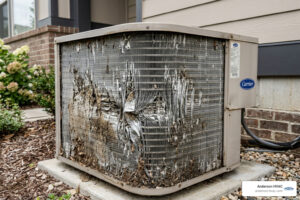
Why Dirty Air Filters and Frozen Evaporator Coils Go Hand in Hand
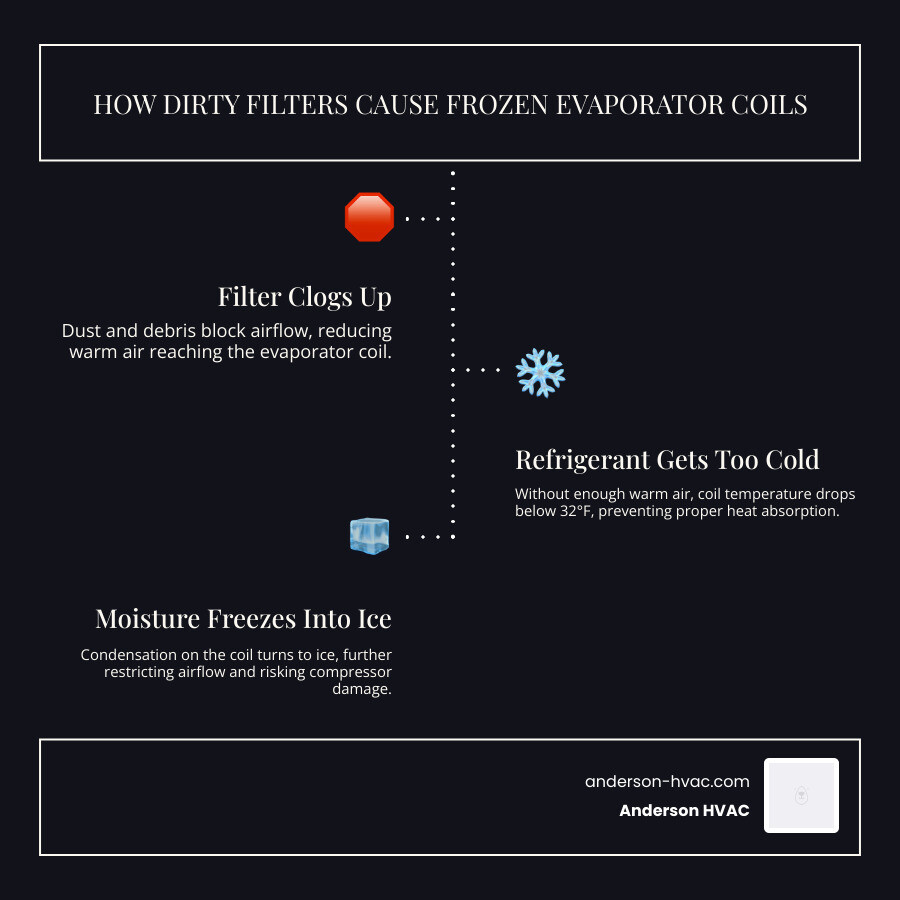
How dirty filters cause frozen evaporator coils comes down to one thing: airflow. When your air filter gets clogged, your AC can’t pull enough warm air across the evaporator coil. Without that warm air, the refrigerant inside the coil gets too cold, drops below freezing, and the moisture that normally drips away turns into ice instead.
Here’s the short version of what happens:
- Filter clogs up – dust and debris block airflow through the system
- Warm air stops reaching the coil – the evaporator coil can’t absorb heat the way it’s designed to
- Refrigerant temperature drops too low – the coil surface falls below 32°F
- Moisture freezes on contact – condensation that should drain away turns to ice
- Ice blocks airflow further – the problem feeds itself and gets worse fast
- Compressor is at risk – liquid refrigerant can be forced back into the compressor, causing serious damage
Most homeowners don’t notice this happening until the AC stops cooling or they spot ice on the copper lines running into their indoor unit. By then, the system has often been struggling for hours — or longer.
In Northern Utah, summers push your AC hard. A neglected filter doesn’t just hurt efficiency — it can turn a cheap maintenance task into an expensive repair.
Understanding the Evaporator Coil and Heat Transfer
To understand why your system turns into an “ice maker” instead of an air conditioner, we first need to look at the heart of the indoor unit: the evaporator coil. This component is responsible for the actual cooling of your home through a process of heat exchange.
Inside the coil, a substance called refrigerant circulates in a closed loop. As your blower fan pulls warm air from your rooms and pushes it over these cold copper fins, the refrigerant absorbs the sensible heat (the heat you can feel on a thermometer). At the same time, it handles latent heat—this is the moisture or humidity in the air. When warm, humid air hits the cold coil, it reaches its dew point, causing water to condense on the coil and drip into a drain pan.
This process requires a delicate balance. If there isn’t enough warm air passing over the coil to “feed” it heat, the refrigerant inside doesn’t boil off into a gas as it should. Instead, it stays extremely cold. When that happens, the condensation doesn’t drip away; it freezes solid. Keeping your home clean and dust-free is a major part of maintaining this balance, as we discuss in The Mountain Green Homeowners Guide To Not Living In A Dust Bowl/.
How Dirty Filters Cause Frozen Evaporator Coils
Think of your air filter as the “lungs” of your HVAC system. When that filter is clean, the system breathes easily. But when it’s caked in dust, pet dander, and debris, the system begins to suffocate. This airflow restriction is the primary reason how dirty filters cause frozen evaporator coils.
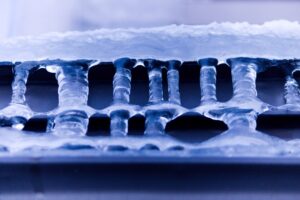
Without a steady stream of warm return air, the heat exchange process fails. The evaporator coil continues to get colder and colder because there is no heat to absorb. Eventually, the surface temperature of the coil drops below 32°F. The condensation that naturally forms from the humidity in your home then begins to layer into ice. This ice acts as an insulator, making it even harder for any remaining airflow to reach the refrigerant, creating a “snowball effect” where the ice layer grows thicker by the minute.
If your filters are frequently getting this dirty, it might be a sign that your home’s air quality needs a deeper look. You can learn more about Why Your Home Needs Air Duct Cleaning In Morgan Ut Right Now/ to help keep those filters cleaner for longer.
The Physics of Airflow: how dirty filters cause frozen evaporator coils
The numbers behind this process are quite striking. Most residential AC systems are designed to move about 350 to 400 cubic feet per minute (CFM) of air per ton of cooling capacity. Research shows that when airflow drops below 350 CFM per ton, a system can lose up to 30% of its cooling capacity almost immediately.
Even a tiny amount of neglect makes a difference. A dust layer as thin as 0.02 inches on your evaporator coil can reduce heat transfer efficiency by up to 15%. This creates a massive pressure drop within the system. As the pressure falls, the boiling point of the refrigerant also drops. This is why a system that is slightly low on refrigerant—even by just 10%—can see coil temperatures fall 5–8°C lower than designed, triggering frost within just 30 minutes. To avoid being misled by contractors who don’t understand these physics, check out our guide: Dont Get Dust Led By A Bad Farr West Contractor/.
Preventing Damage: how dirty filters cause frozen evaporator coils
The good news is that preventing this “ice age” in your utility closet is relatively simple. Regularly changing your air filter every 1 to 3 months can improve your AC’s efficiency by up to 15% and is the single best way to prevent your system from freezing.
When choosing a filter, pay attention to the MERV rating. While higher MERV ratings catch smaller particles, a filter that is too restrictive can actually mimic the effects of a dirty filter by reducing airflow from day one. For most Northern Utah homes, a MERV 8 to 11 filter provides the ideal balance of filtration and airflow. Keeping your air delivery system clean is vital, and you can find local experts in The Definitive List Of Best Duct Cleaning In Huntsville Ut/ to ensure your ductwork isn’t contributing to the problem.
Common Signs Your AC System is Freezing
How do you know if your system is currently a block of ice? There are several tell-tale signs that every homeowner should watch for:
- Weak Airflow: If you notice that the air coming out of your vents feels like a faint whisper instead of a strong breeze, ice may be physically blocking the air from passing through the coil.
- Warm Air: If the air is moving but it isn’t cold, the ice is acting as an insulator, preventing the refrigerant from cooling the air.
- Continuous Running: Because the thermostat never reaches its set point, the AC will run 24/7, leading to a massive spike in your energy bills.
- Visible Ice: You might see frost on the copper tubing (the “suction line”) outside near the condenser or inside near the air handler.
- Water Leaks: As the ice begins to melt partially, it can overwhelm the condensate drain pan, leading to puddles around your furnace or water stains on the ceiling.
Environmental factors play a role, too. If the humidity in your home is above 65%, the risk of frost formation increases by 20–25%. Similarly, if your system has a slight refrigerant leak (even a 10% undercharge), it is significantly more likely to freeze up on a hot day. For residents in our area, maintaining clean air pathways is essential; see Air Duct Cleaning In North Ogden Ut For A Fresher Home/ for more tips.
Immediate Steps to Thaw Your Frozen AC
If you discover a block of ice where your evaporator coil should be, stop the system immediately. Continuing to run a frozen AC can lead to “liquid slugging,” where liquid refrigerant reaches the compressor. Since compressors are only designed to squeeze gas, this can destroy the most expensive part of your system.
Follow these steps to safely thaw your unit:
- Turn off the Cooling: Switch the thermostat from “Cool” to “Off.”
- Turn on the Fan: Switch the fan setting from “Auto” to “On.” This keeps the blower motor running, pushing warm indoor air over the ice to melt it faster.
- Wait: It typically takes 4 to 8 hours for a coil to thaw completely, depending on how much ice has built up. Do not attempt to scrape the ice off with a knife or tool, as you will likely puncture the delicate copper coils.
- Check the Filter: While the system is thawing, pull your air filter. If it’s gray or you can’t see light through it, replace it immediately.
- Clear the Area: Ensure all your supply and return vents are open and not blocked by furniture or curtains.
For a deeper dive into why your airflow might be restricted beyond just the filter, consider Budget Friendly Duct Cleaning In Kaysville Ut That Actually Works/ to clear out years of built-up debris.
Frequently Asked Questions about Frozen Coils
Can a dirty filter cause freezing even if the system was working fine yesterday?
Yes, absolutely. A filter doesn’t go from “clean” to “clogged” overnight, but the system’s ability to handle the restriction reaches a breaking point. Often, a system will limp along during milder weather, but as soon as a heatwave hits and the AC has to run for longer cycles, the lack of airflow finally causes the coil temperature to dip below freezing. Once the first layer of ice forms, the rest follows very quickly.
How often should I change my filter to avoid ice buildup?
We generally recommend checking your filter once a month. If you have pets, live in a dusty area like Mountain Green or Morgan, or have family members with allergies, you may need to replace it every 30 days. For most homes, every 60 to 90 days is sufficient, but never let it go longer than a full season without a fresh filter.
What happens if I run my AC while the coils are frozen?
Running a frozen AC is a recipe for disaster. Beyond the lack of cooling, the ice blocks the refrigerant from absorbing heat. This means the refrigerant stays in a liquid state as it travels back to the outdoor unit. This “liquid slugging” can cause the compressor to seize up or burn out. Replacing a compressor is one of the most expensive repairs in the HVAC world, often costing thousands of dollars.
Conclusion
At Anderson HVAC, we’ve seen it all in our 40+ years of experience serving North Ogden and the surrounding Northern Utah communities. We are a family-owned business that prides itself on individualized service and exceeding expectations. Understanding how dirty filters cause frozen evaporator coils is the first step in taking control of your home’s comfort and protecting your investment.
If you’ve changed your filter and thawed your system, but it continues to freeze up, there may be a more serious issue like a refrigerant leak or a failing blower motor. Don’t wait until the Utah summer heat becomes unbearable. For more information on maintaining your system’s health, read Everything You Need To Know About Duct Cleaning In Kaysville Ut/.
Ready to ensure your system is in top shape? Schedule your expert AC repair in North Ogden today and let our family take care of yours.