


Why Understanding What Permits and Inspections Are Required for AC Replacement Matters
What permits and inspections are required for AC replacement is one of the most important questions a Northern Utah homeowner can ask before scheduling a new system install. Here is a quick answer:
Most AC replacements require:
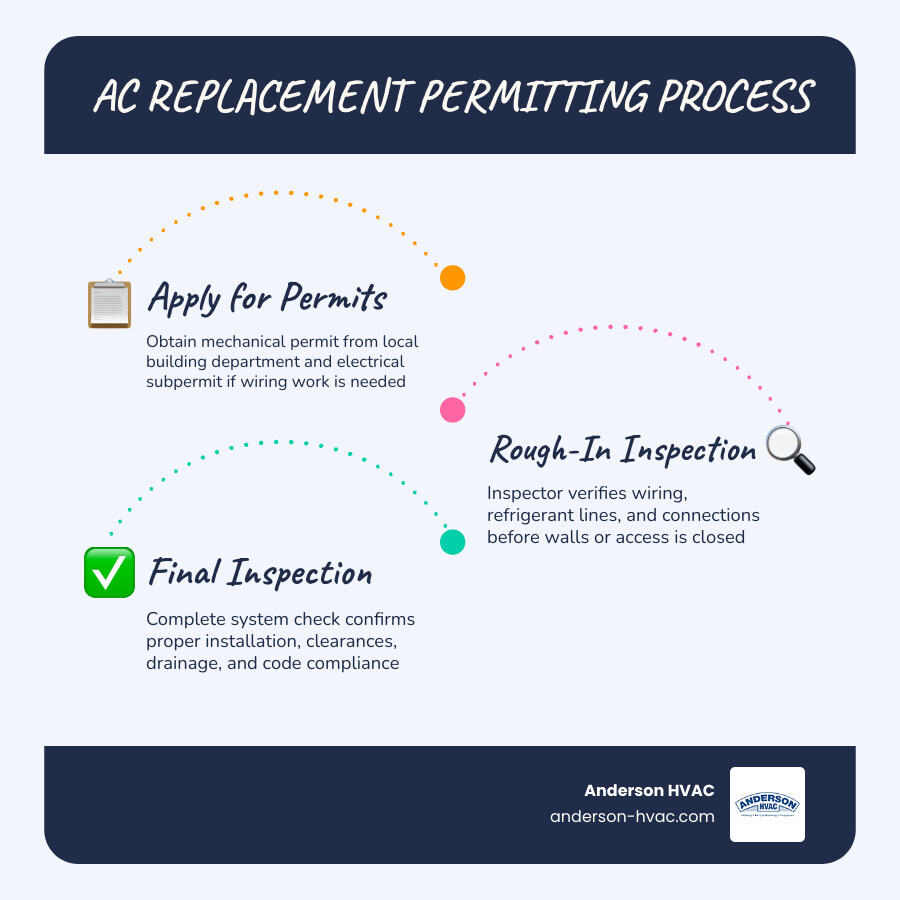
- A mechanical permit from your local building department
- An electrical subpermit if wiring or circuit work is involved
- A rough-in inspection before walls or connections are closed up
- A final inspection once installation is complete
These requirements apply in nearly every U.S. jurisdiction — including cities across Northern Utah — even when you are swapping out an old unit for a new one of the exact same size. Skipping permits can void your manufacturer warranty, complicate a future home sale, and even result in forced removal of the newly installed equipment.
The good news? When you work with a licensed HVAC contractor, they handle most of this process for you.
Simple what permits and inspections are required for ac replacement word guide:
- how long does an ac replacement take
- how to prepare your home for ac replacement day
- what to expect during ac replacement
What Permits and Inspections Are Required for AC Replacement?
When it comes to upgrading your home’s comfort system, many homeowners assume that buying a new air conditioner is as simple as buying a new refrigerator. You unplug the old one, slide the new one in, and call it a day, right? Unfortunately, it is not quite that simple. Your central air conditioner is a complex mechanical system that ties directly into your home’s electrical grid, its structural foundation, and sometimes even its plumbing via condensate lines.
Because of this complexity, local building departments require specific permits to ensure the work is completed safely and up to modern building codes. For a standard air conditioning replacement, you will typically need to navigate two primary types of permits:
- The Mechanical Permit: This is the primary permit required for the installation, alteration, or replacement of heating, ventilation, and air conditioning systems. It ensures that the new equipment is sized correctly for your home, utilizes safe refrigerant lines, and complies with modern environmental standards.
- The Electrical Subpermit: Your air conditioner is one of the largest energy consumers in your home. Swapping out an old unit often requires adjusting the electrical connections, installing a new outdoor disconnect switch, or even resizing the circuit breakers. An electrical subpermit ensures that all electrical work complies with the National Electrical Code (NEC).
These permits are governed and issued by local jurisdictions, meaning your specific city or county building department has the final say on what is required. Because local rules can vary slightly from town to town, it is always best to coordinate with professionals who understand the regional codes. Before the installation team arrives, taking a few steps to clear the workspace and ensure easy access to your indoor and outdoor units is incredibly helpful. You can learn more about this step by reading our guide on How To Prepare Your Home for AC Replacement.
Determining What Permits and Inspections Are Required for AC Replacement in Utah
In Northern Utah, permitting processes are handled at the municipal or county level. Whether you live in North Ogden, Layton, or Huntsville, the state of Utah enforces the International Residential Code (IRC) alongside specific statewide amendments. However, the actual administration of permits and subsequent inspections is carried out by your local building department.
For instance, if you are replacing an air conditioner within Ogden city limits, you must file your permit application directly through the Ogden City Building Division. If you live in an unincorporated area of Weber County or Davis County, you will likely work with the county building department instead.
Local municipalities take these regulations seriously because our unique Utah climate demands highly efficient and durable systems. In Kaysville, for example, inspectors want to verify that any newly installed system meets strict local energy efficiency standards and can handle our hot summer days without straining the local power grid. If you are planning an upgrade in Davis County, we recommend checking out Everything You Need to Know About New AC Installation in Kaysville UT to understand how local guidelines keep your home safe and efficient.
Why Knowing What Permits and Inspections Are Required for AC Replacement Protects Your Home
Building codes and permit requirements can sometimes feel like unnecessary bureaucratic hurdles, but they exist for very practical reasons. Municipal inspectors focus on three main areas of concern when reviewing an air conditioning installation:
- Structural Load: Outdoor condenser units are heavy. They must be installed on a stable, level pad that will not shift, sink, or put undue stress on your home’s foundation or surrounding structures.
- Energy Impact: Modern building codes require new air conditioners to meet specific energy efficiency ratings. Properly permitted installations ensure that your new system complies with these standards, keeping your utility bills manageable and reducing the overall strain on our local power grid.
- Safety Risk: This is the most critical factor. An improperly wired air conditioner poses a severe fire hazard. Additionally, incorrect handling of chemical refrigerants can lead to toxic leaks or environmental damage.
By pulling the correct permits and passing the subsequent municipal inspections, you receive independent, third-party verification that your system is completely safe and installed to code. This protects your family, your property, and your financial investment. For a comprehensive look at how to navigate this entire process smoothly from start to finish, take a look at The Homeowners Roadmap to AC Installation in Brigham City UT.
The Step-by-Step AC Permitting Process
While the permitting process might seem daunting, it follows a structured, logical sequence. When you work with a professional team, we handle these steps on your behalf to ensure a seamless transition. Here is what the typical step-by-step permitting process looks like:
- Step 1: Documentation Gathering: Before applying for a permit, we collect all the necessary technical specifications of your new system. This includes the manufacturer’s spec sheets, AHRI (Air-Conditioning, Heating, and Refrigeration Institute) certificates proving the indoor and outdoor units are a matched pair, electrical load calculations, and a basic site plan showing where the outdoor condenser will sit.
- Step 2: Application Submission: We submit the permit application to your local building department (such as the North Ogden or Layton municipal office). This is typically done through secure online portals designed for registered contractors, which speeds up the review process.
- Step 3: Plan Review: The municipal plan examiner reviews the submitted documentation. They verify that the proposed system is sized correctly for your home’s square footage, matches local energy codes, and does not violate any local zoning setbacks (such as placing a loud condenser too close to a neighbor’s property line).
- Step 4: Permit Issuance: Once the plan examiner approves the paperwork, the building department issues the physical mechanical and electrical permits. At this point, physical installation work can legally begin.
- Step 5: On-Site Posting: The issued permit must be printed and posted visibly at the job site—usually on a front window or near the electrical panel—so that municipal inspectors can sign off on it during their visits.
Navigating this bureaucratic sequence is a vital part of the overall timeline of your system upgrade. If you are wondering how these administrative steps fit into the physical installation schedule, you can read more about what to expect in our guide, How Long Does AC Replacement Take?.
Who is Responsible for Pulling the Permit?
One of the most common questions homeowners ask is: “Should I pull the permit myself, or should my HVAC contractor do it?”
The answer is simple: Your licensed HVAC contractor should always pull the permit.
When a contractor pulls the permit under their own license, they are legally declaring to the city or county that they are responsible for the quality, safety, and code compliance of the installation. If the municipal inspector finds a code violation during the final inspection, the contractor is legally obligated to fix it at their own expense before the permit can be closed out.
If a contractor asks you to pull an “owner-builder” permit, this is a major red flag. It means the contractor may not be properly licensed, bonded, or insured in the state of Utah. By pulling an owner-builder permit, you assume all legal and financial liability for the work. If the installation fails to meet local codes, you—not the contractor—will be responsible for paying to correct the mistakes. Always protect yourself by insisting that your licensed HVAC professional handles the permitting from start to finish.
What Happens During an HVAC Inspection?
Once the physical installation of your new air conditioner is complete, the permitting process is not quite over. To officially close out the permit, the installation must pass a professional inspection by a municipal building inspector.
Depending on your local city guidelines and the complexity of the project, this can involve two separate visits:
- The Rough-In Inspection: This is required if any portion of the installation will be covered up by drywall, insulation, or framing. During a rough-in inspection, the inspector examines ductwork, refrigerant lines, and electrical wiring while they are still fully visible. For standard, straightforward “like-for-like” AC replacements, many jurisdictions will combine this into a single final inspection.
- The Final Inspection: This takes place after the entire system is fully installed and operational. The inspector will visit your home, examine both the indoor evaporator coil/air handler and the outdoor condenser, and verify that every connection meets safety and performance codes.
Knowing what to expect during these visits can take the stress out of the process. For a complete breakdown of how to prepare your home for the big day, take a look at The Ultimate Guide to What to Expect During AC Replacement.
Common Inspection Checkpoints for New AC Units
During the final inspection, the municipal inspector will typically work through a detailed checklist. They are not there to judge your home decor; they are strictly focused on safety, code compliance, and proper mechanical function. Some of the most critical checkpoints they will examine include:
- Breaker and Fuse Sizing: The inspector will open your main electrical panel to verify that the circuit breaker feeding your new air conditioner matches the maximum overcurrent protection rating specified on the unit’s manufacturer nameplate. Overcurrent protection that is too large can fail to trip during an electrical fault, creating a fire hazard.
- The Disconnect Switch: There must be a dedicated, weatherproof electrical disconnect switch installed outdoors within sight of the condenser unit. This allows technicians to safely cut power to the unit during future maintenance without needing to run inside to the main electrical panel.
- Refrigerant Line Insulation: The inspector will check that the suction line (the larger, cold copper pipe carrying refrigerant) is fully insulated along its entire run to prevent energy loss and condensation dripping.
- Condensate Drainage: As your AC cools your home, it pulls moisture out of the air. The inspector will verify that the condensate drain line is properly trapped, made of approved materials (like PVC), and drains safely to an approved location without risking water damage to your home’s foundation or crawl space.
- Clearance Requirements: The outdoor condenser needs plenty of breathing room to operate efficiently. Inspectors will verify that the unit has the required clearances from walls, property lines, and overhanging vegetation (typically at least 12 to 18 inches of clearance on all sides and several feet of clear space above).
Consequences of Skipping the Permitting Process
It can be tempting to skip the permitting process altogether to save a bit of time, especially if a cut-rate contractor offers to do the job “under the table” without a permit. However, the short-term convenience of skipping this step is heavily outweighed by the severe, long-term consequences:
- Stop-Work Orders and Fines: If a municipal code enforcement officer notices an unpermitted installation in progress, they have the authority to issue an immediate stop-work order. You can face hefty fines, and you will be forced to halt the project until the proper permits are pulled and paid for.
- Retroactive Permits: If unpermitted work is discovered after the fact, you will be required to apply for a retroactive permit. These often cost double or triple the standard permit fees. Even worse, the inspector may require you to cut open finished drywall so they can inspect hidden wiring or refrigerant lines.
- Voided Manufacturer Warranties: Major HVAC manufacturers (like Lennox, Carrier, or Trane) require their systems to be installed by licensed professionals in compliance with all local codes. If you submit a warranty claim for a failed compressor but cannot provide proof of a permitted, inspected installation, the manufacturer can legally deny your claim.
- Insurance Denials: If an unpermitted air conditioner experiences an electrical failure that leads to a house fire, your homeowner’s insurance company may investigate the cause. If they discover the system was installed illegally without a permit or inspection, they may deny coverage for the damage.
- Home Sale Complications: When you eventually sell your home, the buyer’s home inspector and the title company will cross-reference your home’s physical features with municipal permit records. If they discover a new air conditioning system with no record of a permit, the sale can be delayed or fall through completely until you pull retroactive permits and pass inspections.
Frequently Asked Questions About AC Permits
Navigating building codes can raise plenty of questions. Below are some of the most common inquiries we hear from Northern Utah homeowners.
Do like-for-like AC replacements require a permit?
Yes. Even if you are replacing an old 3-ton air conditioner with a brand-new 3-ton unit in the exact same location, you still need a mechanical permit and an electrical subpermit.
While the physical size and location of the equipment may not have changed, building codes and equipment standards certainly have. An inspector needs to verify that the electrical wiring can handle the modern unit, that the refrigerant lines are installed safely, and that the new system complies with current energy efficiency mandates.
Are there any exemptions where a permit is not required?
Yes, there are a few minor exceptions where you do not need to pull a permit:
- Portable Units: Small, portable air conditioners that plug into a standard wall outlet and do not require permanent modifications to your home do not require a permit.
- Window Air Conditioners: Standard window-mounted units that can be easily installed and removed without altering the building envelope or electrical wiring are exempt.
- Minor Repairs: Routine maintenance tasks, such as replacing a dirty air filter, cleaning the condenser coils, topping off refrigerant, or replacing a failed capacitor, do not require a permit.
How long does it take to get an AC permit approved?
For a standard residential AC replacement, the permitting timeline is usually very fast. Many Northern Utah building departments utilize online contractor portals that allow for same-day or next-day permit issuance for standard “equipment swaps.”
If your project involves a more complex installation—such as adding a ductless mini-split system to a new home addition or completely rerouting your ductwork—the plan review process can take anywhere from 3 to 7 business days. Once the work is complete, scheduling the final inspection typically takes another 1 to 3 business days depending on the current workload of your local building department.
Conclusion
Understanding what permits and inspections are required for AC replacement is the secret to a safe, stress-free home upgrade. While the paperwork and inspection checkpoints might seem complex at first glance, they are designed to protect your safety, your home’s value, and your financial investment.
At Anderson HVAC, we believe in doing things the right way—no shortcuts, no exceptions. As a family-owned business with over 40 years of experience serving our neighbors in North Ogden and throughout Northern Utah, we take care of the entire permitting and inspection process for you. Our skilled, licensed technicians handle the technical documentation, coordinate with local building departments, and ensure your new system complies perfectly with all local codes.
When you are ready for a reliable, professional, and fully compliant home comfort upgrade, we are here to help. Schedule your professional AC replacement in North Ogden with Anderson HVAC today, and let our family take care of yours!

