


Is Annual HVAC Maintenance Worth It? Here’s What Northern Utah Homeowners Need to Know
Annual HVAC maintenance is it worth it for most homeowners — and the short answer is yes, especially in Northern Utah where systems work hard through cold winters and hot summers alike.
Here’s a quick look at why:
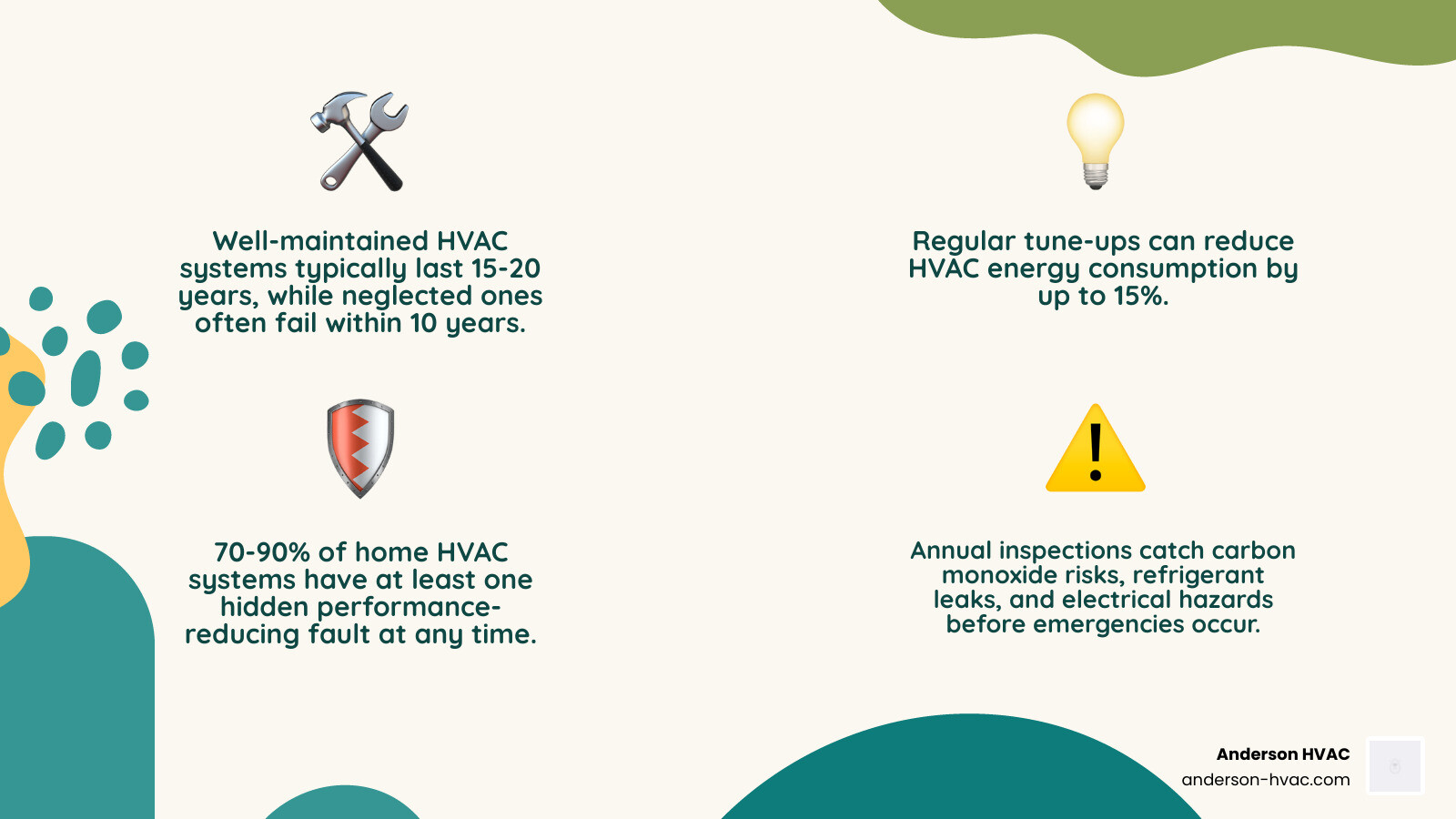
- Longer equipment life – Well-maintained systems typically last 15-20 years; neglected ones often fail in 10 years or less
- Lower energy bills – Regular tune-ups can reduce energy consumption by up to 15%
- Fewer breakdowns – Systems without maintenance have a significantly higher chance of major failure
- Warranty protection – Most manufacturers require documented annual service to honor parts warranty claims
- Home safety – Inspections catch carbon monoxide risks, refrigerant leaks, and electrical hazards before they become emergencies
Think of it the way you think about oil changes for your car. Skipping one rarely causes immediate disaster. But skip several in a row and the wear quietly adds up — until one day the engine doesn’t start. Your HVAC system works exactly the same way. It won’t warn you before it quits on the coldest night in January or the hottest afternoon in August.
The U.S. Department of Energy estimates that 70% to 90% of home HVAC systems have at least one performance-reducing fault at any given time — most of which go unnoticed until they trigger a breakdown.
For homeowners in Ogden, North Ogden, and the surrounding Northern Utah communities, the stakes are real. Extreme seasonal swings mean your heating and cooling equipment rarely gets a break, which makes proactive care more important here than in milder climates.
What is an HVAC Maintenance Plan?
An HVAC maintenance plan is a proactive service agreement between you and a trusted local comfort specialist. Rather than waiting for your heating or cooling system to break down and leaving you stranded in the freezing cold or sweltering heat, a maintenance plan schedules regular professional checkups to keep everything running smoothly.
These service contracts are designed to take the guesswork out of home comfort. When you sign up, you are essentially securing professional oversight for your home’s most expensive mechanical systems. Instead of trying to remember when you last had your furnace or air conditioner checked, we handle the scheduling and send an experienced technician to your home to perform a comprehensive system inspection.
During these visits, a technician does far more than just glance at your equipment. They dive deep into the inner workings of your system, checking safety controls, testing electrical connections, measuring airflow, and ensuring that every component is operating within its original manufacturer specifications. To get a complete picture of what goes on behind the panels, you can read through our detailed breakdown of Everything Your HVAC Tech Should Check During a Tune-Up.
What is Included in a Standard Tune-Up?
When a professional technician services your system, they follow a rigorous multi-point checklist tailored to the specific season. A standard tune-up is divided into mechanical adjustments, safety checks, and deep cleaning.
Here is what a thorough, professional tune-up typically includes:
- Coil Cleaning: Over the course of a Utah summer, your outdoor condenser coil collects dust, cottonwood seeds, and grass clippings. Indoors, the evaporator coil can accumulate a layer of household dust. Cleaning these coils is vital because dirty coils force your system to work much harder to transfer heat, spiking your energy bills.
- Refrigerant Level Checks: Technicians measure refrigerant pressures to ensure there are no slow leaks. Running an air conditioner with low refrigerant levels will eventually destroy the compressor, which is one of the most expensive parts to replace.
- Thermostat Calibration: We verify that your thermostat is communicating accurately with your heating and cooling units so you do not waste energy heating or cooling an empty home.
- Condensate Drain Clearing: Air conditioners and high-efficiency furnaces produce a significant amount of moisture. We inspect and clear these drain lines to prevent algae buildup, which can cause water to back up and damage your drywall or ceilings.
- Moving Parts Lubrication: Friction is the enemy of longevity. Lubricating fan motors and bearings keeps them running cool and quiet.
- Electrical Connection Tightening: Loose electrical connections can cause voltage drops, system shutoffs, or even spark hazards. We inspect and tighten all wire terminals and measure capacitor performance.
How Often Should You Service Your System?
To keep your system operating at peak performance, seasonal timing is everything. Ideally, your HVAC system should be professionally serviced twice a year: once in the spring for your air conditioning, and once in the fall for your heating system.
If you heat and cool your home with a heat pump, this bi-annual schedule is even more critical. Because heat pumps run nearly year-round to provide both warmth in the winter and cool air in the summer, they experience double the wear and tear of a standard single-season system.
To help you plan your seasonal calendar, we have put together a guide on How Often Should You Service Your HVAC? which details the ideal months to schedule these visits before the extreme Utah weather sets in.
Annual HVAC Maintenance Is It Worth It?
When evaluating whether annual hvac maintenance is it worth it, it helps to look at the hard facts. Many homeowners wonder if a maintenance plan is a genuine investment in their home or simply an unnecessary recurring cost.
The reality is that routine maintenance delivers a clear return on investment (ROI) that you can see in your monthly utility statements and your long-term bank balance. It transitions your relationship with your heating and cooling system from reactive (paying for expensive emergency repairs when things break) to proactive (preventing those failures from happening in the first place).
Beyond the financial savings, regular maintenance directly impacts your family’s safety and well-being. A neglected furnace can develop a cracked heat exchanger, which can leak deadly, odorless carbon monoxide into your home. Regular inspections also protect your indoor air quality by preventing mold growth in damp condensate pans and ensuring that airborne dust and allergens are properly captured by clean filtration systems.
| Feature / Benefit | Well-Maintained HVAC System | Neglected HVAC System |
|---|---|---|
| Average Lifespan | 15 to 20 Years | 8 to 10 Years |
| Energy Efficiency | Keeps up to 95% of original efficiency | Loses ~5% efficiency every year |
| Risk of Sudden Breakdown | Very Low (monitored components) | High (especially during extreme weather) |
| Manufacturer Warranty | Fully Protected (with service records) | Voided (due to lack of professional care) |
| Monthly Utility Costs | Optimized and Consistent | Steadily rising over time |
| Safety Risks | Minimized through safety control testing | Higher risk of electrical shorts or gas leaks |
Why Annual HVAC Maintenance Is It Worth It for System Longevity
Think of your HVAC system as an athletic runner. If they run a marathon in heavy boots with a cold, they are going to wear down much faster than if they are healthy and wearing proper running shoes. When your system has to push air through a clogged filter or transfer heat through dirty coils, it experiences severe mechanical wear.
This extra strain causes the system’s motors to run hotter, which degrades the winding insulation and leads to premature electrical failure. For example, a simple, inexpensive part like a capacitor can lose its electrical charge over time. If a weakening capacitor is not caught during a routine tune-up, it will eventually cause the compressor—the very heart of your outdoor unit—to overheat and burn out. Replacing a compressor is a major mechanical surgery, whereas replacing a capacitor during a scheduled visit takes minutes.
By keeping the internal components clean and properly adjusted, you prevent this mechanical fatigue. This simple habit can easily double the lifespan of your system, delaying the need for a major replacement. For heat pump owners, understanding this relationship is key to protecting your investment. Learn more about how to time these visits by reading Timing Is Everything for Your Heat Pump Service.
Why Annual HVAC Maintenance Is It Worth It for Energy Efficiency
When your heating or cooling system is dirty, it has to run longer cycles to achieve the temperature set on your thermostat. This extra runtime translates directly into higher utility bills. According to the U.S. Department of Energy, even a small amount of dust buildup on your outdoor coils or blower wheel can reduce your system’s overall efficiency by 5% to 15%.
In Northern Utah, where we experience hot, dry summers and freezing winters, these efficiency losses quickly add up to significant energy waste. Routine maintenance clears away the physical barriers to airflow and heat transfer, allowing your system to do its job in shorter, more efficient cycles.
To maximize these utility savings, timing is critical. Scheduling your air conditioner’s tune-up before the summer heat arrives ensures you start the cooling season with a highly efficient system. To find out when to get on our calendar, check out The Best Time to Schedule Your Annual AC Tune-Up.
Evaluating the Value of a Professional Service Agreement
If you decide that regular maintenance is worth it, the next question is whether you should buy a structured maintenance plan or simply call for a tune-up on an as-needed basis.
Professional service agreements are designed to offer value that goes beyond the physical labor of cleaning and testing your equipment. They provide a safety net for your home comfort. The primary benefits of a structured plan include:
- Priority Scheduling: When the temperature in Layton or Syracuse hits 100 degrees in July, HVAC companies are flooded with emergency calls. Maintenance plan members bypass the queue, ensuring they receive rapid, priority service when they need it most.
- Repair Discounts: If a technician does find a worn-out part during a tune-up, maintenance agreements typically include a discount on parts and labor, helping you resolve the issue before it causes a system shutdown.
- No Diagnostic Fees: Many plans waive the standard diagnostic or trip fees when you need an unscheduled service call.
- Peace of Mind: Knowing that professionals are keeping an eye on your heating and cooling systems allows you to focus on your family, without worrying about a sudden home comfort disaster.
To understand how a pre-season checkup shields your home from summer emergencies, read our article on how to Prevent Costly Summer Breakdowns with a Professional AC Tune-Up.
Maintenance Plans vs. Pay-As-You-Go Service
Some homeowners prefer to pay for service on an as-needed basis, calling an HVAC company only when they remember to schedule a tune-up or when something goes wrong. While this pay-as-you-go approach might seem flexible, it often leads to neglected maintenance because it is easy to forget about your furnace or air conditioner when they are working fine.
A structured maintenance plan solves this problem by automating your system’s care. When you partner with us, we keep track of your service intervals and reach out to you when it is time to schedule your spring or fall visit.
Additionally, pay-as-you-go service can become incredibly costly if you experience a breakdown during peak season. Without a plan, you will pay full price for emergency diagnostic fees, overtime labor rates, and replacement parts. A maintenance plan mitigates these risks, making home maintenance predictable and easy to budget.
When a Maintenance Agreement Makes Sense
While almost every homeowner can benefit from a maintenance plan, there are specific scenarios where an agreement is exceptionally valuable:
- Older Systems (5 to 15 Years Old): If your furnace or air conditioner is entering the second half of its expected lifespan, individual components are more likely to show wear. Regular monitoring can catch these failing parts before they cause a chain reaction of damage.
- Extreme Climate Demands: In Northern Utah areas like Huntsville, Mountain Green, or Brigham City, our systems endure freezing mountain winters and intense summer heat. This heavy usage makes routine maintenance essential to prevent wear-related breakdowns.
- Busy Households: If you have a busy work schedule, managing children, or traveling frequently, a maintenance plan ensures your home comfort is taken care of without adding another task to your to-do list.
Frequently Asked Questions about HVAC Maintenance
We receive many questions from homeowners across Northern Utah about how to best care for their heating and cooling systems. Here are some of the most common inquiries we hear.
Can Homeowners Perform HVAC Maintenance Themselves?
There are several important maintenance tasks that homeowners can—and should—perform themselves to keep their systems running smoothly between professional visits:
- Change Air Filters: This is the single most important task you can do. Inspect your filters monthly and replace them every 1 to 3 months, depending on whether you have pets or allergy sufferers in your home.
- Clear Outdoor Debris: Keep plants, shrubs, and weeds trimmed back at least two feet from your outdoor condenser unit. Gently hose off the metal fins to remove loose dirt and grass clippings.
- Keep Vents Unblocked: Ensure that furniture, rugs, or drapes are not blocking your return or supply vents.
However, complex tasks like checking refrigerant pressures, testing electrical capacitors, cleaning internal blower wheels, and inspecting gas heat exchangers for microscopic cracks require specialized diagnostic tools, safety training, and professional expertise. Attempting to perform these tasks yourself can void your warranty, damage your equipment, or expose you to high-voltage electricity and dangerous carbon monoxide leaks.
Does Skipping Maintenance Void My Manufacturer Warranty?
Yes, in many cases, it absolutely does. Major HVAC manufacturers (such as Carrier, Trane, Lennox, and others) require proof of regular, professional maintenance to honor their parts warranties.
If a major component like your compressor or heat exchanger fails within its warranty period, the manufacturer may ask for documented service records from a licensed technician before they agree to ship a replacement part. If you cannot provide proof of annual maintenance, your claim could be denied, leaving you to cover the full cost of a major repair out of pocket.
What Common Problems Does Annual Maintenance Prevent?
Routine maintenance is designed to catch minor issues before they escalate into major, expensive headaches. Some of the most common problems we prevent during our tune-ups include:
- Frozen Evaporator Coils: Restricted airflow from dirty filters or low refrigerant levels can cause your indoor coil to drop below freezing, turning it into a block of ice and shutting down your cooling completely.
- Water Damage: Clogged condensate drain lines can overflow, causing water to back up and drip into your furnace’s electrical compartment or pool on your ceiling and floors.
- Carbon Monoxide Leaks: Over time, the metal in your furnace’s heat exchanger expands and contracts. We inspect these components for cracks that could allow dangerous combustion gases to escape into your home’s breathing air.
- Short Cycling: When sensors or electrical components are dirty or failing, your system may turn on and off rapidly, causing excessive wear and spiking your energy consumption.
Conclusion
When you look at the facts, the answer to whether annual hvac maintenance is it worth it is clear. Regular maintenance is a smart investment that pays for itself by protecting your equipment, keeping your utility bills low, and ensuring your family’s safety and comfort year-round.
At Anderson HVAC, we have been serving our neighbors in North Ogden, Ogden, and the surrounding Northern Utah communities for over 40 years. As a family-owned and operated company, we pride ourselves on providing personalized, high-quality service that exceeds your expectations. We know the unique climate challenges of our region, and we are committed to keeping your home comfortable in every season.
Don’t wait for the next extreme weather shift to find out if your system is ready. Contact our friendly, experienced team today to Schedule your professional service with Anderson HVAC and experience the peace of mind that comes with expert, reliable comfort care.

