


Why Knowing How Often Should You Service Your HVAC Could Save You Thousands
How often should you service your HVAC is one of the most important questions you can ask as a homeowner in Northern Utah — and the answer depends on your system type.
Quick Answer: Recommended HVAC Service Frequency
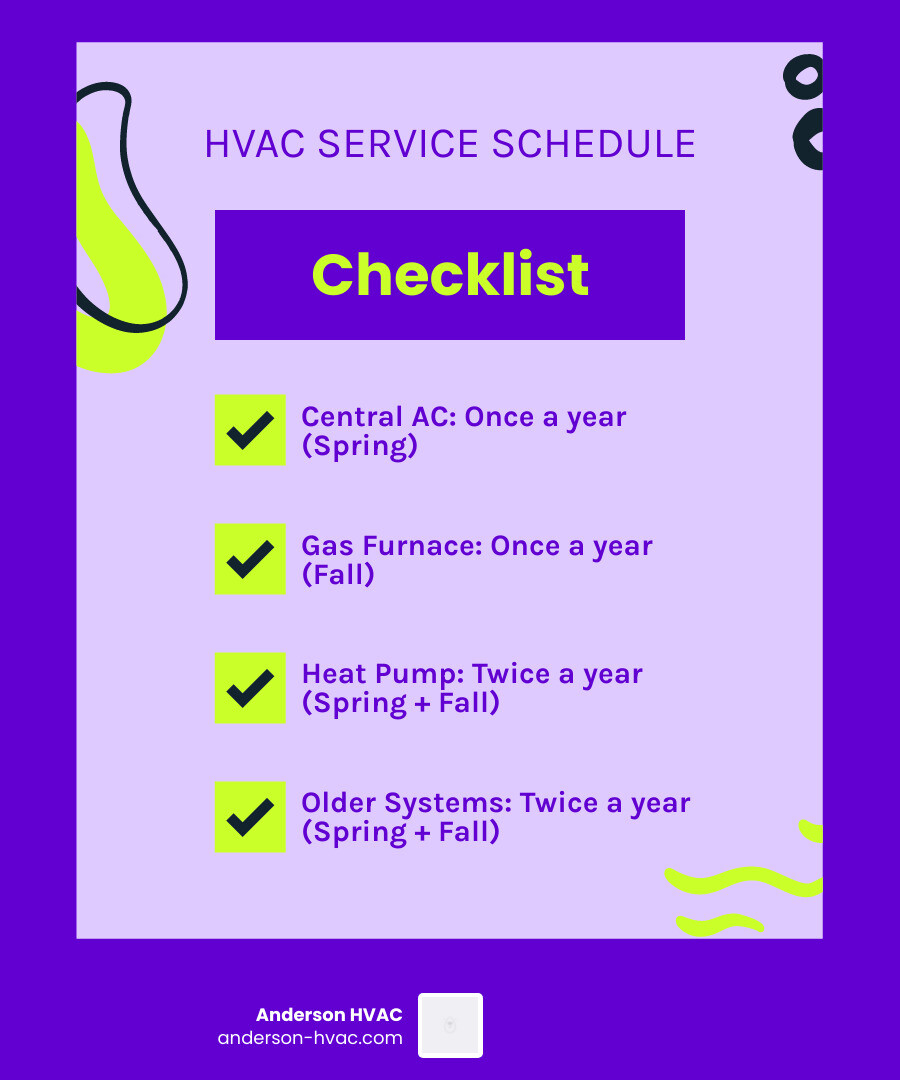
| System Type | Recommended Frequency | Best Timing |
|---|---|---|
| Central AC | Once per year | Spring (March–May) |
| Gas Furnace | Once per year | Fall (September–November) |
| Heat Pump | Twice per year | Spring and Fall |
| Older Systems (10+ years) | Twice per year | Spring and Fall |
Most homeowners don’t think about their HVAC system until something goes wrong — usually on the hottest day of July or the coldest night in January. By then, technicians are booked out for days and the repair bill is far steeper than a routine tune-up would have been.
Here’s the reality: regular maintenance prevents 70–80% of HVAC breakdowns. A neglected system also uses significantly more energy and can fail years before its time. In Northern Utah, where summers push AC units hard and winters demand reliable heat, skipping service isn’t just inconvenient — it’s costly.
This guide walks you through exactly how often to schedule service, what affects that schedule, and how to get the most out of every maintenance visit.
The Gold Standard: How Often Should You Service Your HVAC?
In home maintenance, the “Gold Standard” is a bi-annual schedule: once in the spring for your cooling system and once in the fall for your heating system. Following this rhythm ensures that each component is inspected just before it faces its heaviest workload.
For residents in North Ogden, Layton, or Kaysville, the timing is everything. Scheduling your AC prep between March and May allows us to clear out any debris or dust that settled during the winter. Conversely, scheduling furnace readiness between September and November ensures your home stays warm and safe before the first Utah snowstorm hits.
By separating these visits, we can test your equipment under real-world conditions. It is difficult to accurately test a furnace’s full heating capacity when it’s 90 degrees outside, just as it’s hard to check an AC’s refrigerant pressures when it’s snowing. The Best Time to Schedule Your Annual AC Tune-Up is during these “shoulder seasons” when the weather is mild and technician schedules are more flexible.
Why Heat Pumps Require a Different Schedule
If your home utilizes a heat pump, your maintenance needs are slightly different. Unlike a dedicated air conditioner that rests all winter, a heat pump works year-round to provide both cooling and heating. This dual-mode stress means the system accumulates wear and tear twice as fast as a standalone unit.
Because heat pumps are always “on duty,” they require professional service every six months. Skipping a visit can lead to “heat pump headaches,” such as the system struggling to switch between modes or losing efficiency during extreme temperature swings. Understanding The Great Debate of Heat Pump vs AC Maintenance highlights that while the technology is efficient, it demands more frequent professional attention to stay that way. Regular care is truly The Secret to a Long Living Heat Pump.
Maintaining Warranty Compliance
One of the most overlooked reasons to maintain a strict service schedule is your manufacturer’s warranty. Major brands like Carrier, Trane, and Lennox often require documented proof of annual professional maintenance to honor warranty claims.
If a major component like a compressor or heat exchanger fails, the manufacturer may ask for service records from the last few years. If you cannot provide proof of professional care, they may deny the claim, leaving you to cover the full cost of the repair. Consistent, documented visits help you Stop Heat Pump Headaches Before They Start and keep your financial protections intact.
Key Factors That Influence Your Maintenance Frequency
While the general rule is once or twice a year, certain factors might require you to call us more frequently. Our Northern Utah climate is a major driver; we experience extreme temperature shifts that put significant strain on mechanical parts.

Adjusting how often should you service your hvac for older systems
As a system crosses the 10-to-15-year threshold, its components begin to experience fatigue. Bearings wear down, electrical connections can loosen due to years of vibration, and metal components like heat exchangers undergo thousands of cycles of expansion and contraction.
For older systems, we often recommend a more vigilant maintenance schedule. Catching a failing capacitor or a fraying belt during a scheduled visit is much better than dealing with a total system failure in the middle of a January cold snap. Increased monitoring of wear and tear can extend the life of an aging unit by several years, delaying the need for a costly full replacement.
Environmental Impacts on Service Needs
Your home’s internal and external environment also plays a role in how often should you service your hvac.
- Pets: Fur and dander can clog filters and coat evaporator coils, reducing cooling efficiency by up to 40%.
- Indoor Smoking: Residue from smoke can create a sticky film on sensitive components, attracting dust and reducing airflow.
- High Dust Areas: If you live near new construction in West Haven or Syracuse, or in windier parts of the valley, your system will likely pull in more particulate matter.
- Usage Patterns: If your household keeps the thermostat at a constant 68 degrees in summer, your system is running much longer than average and needs more frequent check-ups.
What Happens During a Professional Tune-Up?
A professional service visit is much more than just a quick look-over. It is a comprehensive health check for your home’s most expensive appliance. During a standard visit, we perform a deep dive into the electrical, mechanical, and safety systems of your unit. Everything Your HVAC Tech Should Check During a Tune-Up includes tightening electrical connections, lubricating moving parts to reduce friction, and testing the control sequence to ensure the system starts and stops safely.
The critical role of cleaning in how often should you service your hvac
Dirt is the number one enemy of HVAC efficiency. When dust coats your evaporator coils or debris clogs your condenser fins, the system has to work much harder to move heat. This “thermal barrier” of grime can consume 20–30% more energy and eventually lead to compressor failure.
Cleaning these components is a technical task that requires specialized solutions and care to avoid bending the delicate aluminum fins. You must Keep Your Coils Clean or Pay the Price Later in the form of higher utility bills and premature equipment death.
Safety and Performance Diagnostics
Safety is our top priority, especially with gas furnaces. We perform rigorous carbon monoxide checks and burner flame inspections to ensure there are no cracks in the heat exchanger. A healthy burner flame should be a steady blue; yellow or flickering flames can indicate improper combustion and a potential safety risk. We also calibrate your thermostat and check refrigerant levels. It’s important to note that refrigerant is in a sealed system; if levels are low, it means there is a leak that needs to be addressed, not just “topped off.”
The ROI and Benefits of Regular Maintenance
Investing in maintenance provides a significant return on investment (ROI). Research suggests that every dollar spent on preventive care can save you $3 to $6 in the long run.
The Impact of Regular Maintenance
| Feature | Maintained System | Neglected System |
|---|---|---|
| Energy Efficiency | Operates at factory-rated efficiency | 10–30% efficiency loss |
| Average Lifespan | 15–20+ years | 10–12 years |
| Breakdown Risk | Low (70–80% of issues prevented) | High (85% of repairs are maintenance-related) |
| Annual Energy Cost | $100–$300 lower on average | Significantly higher bills |
Regular maintenance helps you Prevent Costly Summer Breakdowns with a Professional AC Tune-Up by identifying small issues—like a worn contactor—before they turn into “no-cool” emergencies that require 24/7 service rates.
Homeowner Tasks and Warning Signs
While professional service is essential, there are things you should do between our visits to keep things running smoothly.
- Filter Replacement: This is the single most important DIY task. Check your filters monthly and replace them every 1–3 months. If you have multiple pets, you might need to change them every 30 days.
- Outdoor Clearance: Keep a two-foot “buffer zone” around your outdoor unit. Trim back bushes, remove tall weeds, and clear away fallen leaves or grass clippings.
- Condensate Drains: Ensure the drain line is clear of algae or clogs. A backed-up drain can cause water damage or trigger a safety switch that shuts your system down.
Immediate Signs You Need Professional Service
Don’t wait for your scheduled appointment if you notice any of the following “red flags”:
- Unusual Noises: Grinding, squealing, or loud banging.
- Strange Odors: Burning smells or a “musty” dirty-sock smell.
- Weak Airflow: Vents that barely blow air even when the fan is on high.
- Spiking Bills: A sudden jump in energy costs without a change in weather or usage.
- Short-Cycling: The system turns on and off every few minutes without reaching the set temperature.
Frequently Asked Questions
What are the benefits of an HVAC maintenance contract?
Maintenance contracts (or plans) remove the guesswork from your schedule. They typically bundle your spring and fall visits at a discounted rate and often include perks like priority scheduling during busy seasons and discounts on any necessary repairs. It’s a “set it and forget it” way to ensure your home stays comfortable.
How long does a professional HVAC service visit take?
A thorough, high-quality tune-up usually takes between 60 and 90 minutes. This allows the technician enough time to perform all safety checks, clean the coils, test the electrical components, and provide you with a detailed report of the system’s health.
Is it necessary to service a brand-new HVAC system?
Yes! In fact, it’s critical. New systems need an initial calibration to ensure they are performing to factory specifications in your specific home environment. Furthermore, as mentioned earlier, annual service is almost always a requirement to keep your manufacturer’s warranty valid from day one.
Conclusion
Understanding how often should you service your hvac is the key to a stress-free home. At Anderson HVAC, we’ve spent over 40 years helping our neighbors in North Ogden and throughout Northern Utah stay comfortable regardless of the weather outside. As a family-owned business, we take pride in providing the kind of individualized, dependable service that only comes from decades of local experience.
Don’t wait for your system to fail during a heatwave or a blizzard. Schedule your professional HVAC maintenance today to ensure year-round comfort and give your family the peace of mind they deserve. From our family to yours, we’re here to make sure your HVAC system serves you faithfully for years to come.

