


Why Ogden Homeowners Pay Too Much to Stay Cool — And How to Fix It
If you’re searching for energy saving AC tips for the Ogden area homeowners, here’s a quick answer before we dive in:
Top Energy Saving AC Tips for Ogden Homeowners:
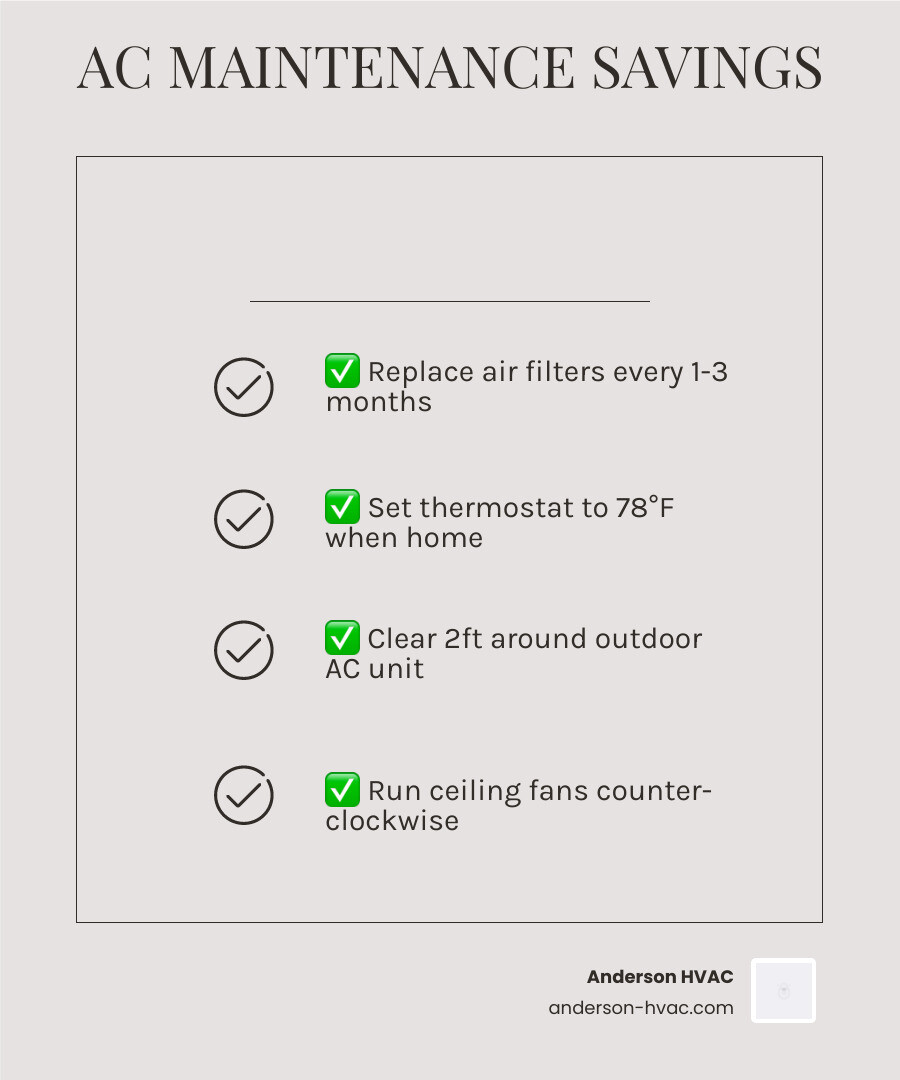
- Set your thermostat to 78°F or higher when home
- Replace air filters every 1-3 months (more often near Plain City or Farr West)
- Seal leaky ducts — they can waste 20-30% of your cooled air
- Schedule professional AC maintenance each spring
- Run ceiling fans counter-clockwise to feel up to 4°F cooler
- Avoid using heat-producing appliances between 4-7 p.m.
- Keep 2 feet of clearance around your outdoor AC unit
- Get a smart thermostat — it can cut cooling bills by 10-15%
- Make sure your AC is properly sized for your elevation zone
Ogden summers are no joke. Temperatures can swing more than 100 degrees between the coldest winter nights and the hottest July afternoons. That kind of extreme puts serious stress on your air conditioning system — and on your energy bill.
What makes it harder is that Ogden isn’t just one climate. Whether you’re on the valley floor near Roy, up on the East Bench, or out in Ogden Valley near Huntsville, your AC works differently at each elevation. Add in Weber County’s dust, pollen, and canyon winds, and you’ve got a recipe for a system that burns more energy than it should.
The good news? Most of the waste is preventable. Research shows that up to 80% of mechanical AC failures in Utah come down to simple dirt and neglect — not worn-out equipment. A few smart habits and the right maintenance schedule can make a real difference in what you pay to stay comfortable this summer.
Master Your Thermostat for Maximum Savings
One of the most immediate ways we can lower our cooling costs is by rethinking how we use our thermostats. It might sound warm at first, but the Department of Energy recommends setting your thermostat to 78°F when you are at home. For every two degrees you can give up, you can save roughly 5% to 10% on your operating costs.
If you haven’t made the switch yet, upgrading to a smart thermostat is a game-changer for Northern Utah homes. These devices can reduce energy bills by 10-15% by learning your schedule and automatically adjusting the temperature when you’re at work or sleeping. For many of our neighbors in Layton or Kaysville, this translates to significant annual savings. To understand more about how these modern systems integrate with your home, check out our Anderson HVAC Energy Efficient Review 101.
Avoid the “Cranking” Myth
We’ve all been there: you walk into a hot house and immediately crank the thermostat down to 65°F, thinking it will cool the house faster. Unfortunately, that’s not how AC works. An air conditioner cools at a consistent rate regardless of the setting; “cranking it down” just ensures the compressor runs longer, often overshooting your comfort level and wasting money in the process.
Additionally, pay attention to your thermostat’s location. If it’s mounted on a wall that receives direct sunlight or is near a heat-producing appliance like a lamp or oven, it will get a “false reading.” This causes the AC to run much longer than necessary because the thermostat thinks the whole house is hotter than it actually is.
Essential DIY Maintenance and Energy Saving AC Tips for the Ogden Area Homeowners
Maintenance isn’t just about preventing breakdowns; it’s about efficiency. A dirty air filter can reduce your AC’s efficiency by up to 15%. When the filter is clogged, your blower motor has to work twice as hard to pull air through, which spikes your electricity usage and can even cause your evaporator coils to freeze.
In the Ogden area, we recommend checking your filter every 30 days and replacing it at least every 1-3 months. If you live in a high-pollen area or near active construction, you might need to change it even more frequently. Keeping the internal components of your system clean is vital; as the saying goes, keep your coils clean or pay the price later.
Beyond the filter, take a walk outside. Your outdoor condenser unit needs to “breathe” to release the heat it pulled from your home. We follow the “2-foot rule”: ensure there is at least two feet of clear space around the unit, free of weeds, shrubs, or stored items.
Managing the Weber County “Dust Factor”
Homeowners in areas like Plain City, West Haven, and Farr West face a unique challenge: the “Dust Factor.” With ongoing residential construction and proximity to agricultural fields, fine silt and debris often settle into the delicate fins of outdoor AC units.
When this dust combines with moisture, it creates a “blanket” that traps heat. We suggest gently rinsing your outdoor coils with a garden hose (never a pressure washer!) a few times a season to keep airflow unrestricted. This simple DIY task can prevent your system from working 40% harder than it needs to.
Navigating Ogden’s Unique Climate Zones and Altitude
Ogden is unique because we aren’t just one flat city. We live in three distinct elevation zones: the Valley Floor (approx. 4,300 ft), the East Bench (4,500–4,800 ft), and the Ogden Valley (5,000+ ft).
As altitude increases, the air becomes thinner. This leads to “altitude derating,” where an AC unit’s capacity actually drops by about 3% for every 1,000 feet of elevation. This means a system in Huntsville or Eden might deliver 5% to 7% less cooling than its label suggests. When we design systems for our neighbors, we use precise Manual J calculations to ensure the unit can handle these local atmospheric changes without wasting power.
Why Proper Sizing is One of the Best Energy Saving AC Tips for the Ogden Area Homeowners
Oversizing is a common mistake in Utah. Many “rule-of-thumb” estimates result in systems that are 30% too large for the home. While a bigger unit sounds better, it actually leads to “short cycling”—where the AC turns on and off rapidly.
Short cycling is an energy nightmare. The most expensive part of an AC cycle is the first few minutes when it starts up. An oversized unit never runs long enough to remove humidity, leaving your home feeling “cold and clammy” while your power bill skyrockets. Ensuring your system meets current SEER2 standards and is sized for your specific square footage and insulation levels is the most effective way to guarantee long-term efficiency.
High-Altitude Performance Verification
If you live in the higher elevations of Weber County, standard “sea-level” settings won’t cut it. Proper installation requires verifying the refrigerant charge using high-altitude pressure charts. We also check the static pressure of your ductwork to ensure the thinner air is moving efficiently through the system. For homes with gas furnaces paired with their AC, we must also ensure the gas orifices are properly derated for the elevation to prevent safety hazards and energy waste.
Sealing the Envelope: Ducts, Insulation, and Habits
You can have the most efficient AC unit in the world, but if your home “leaks” air, you’re throwing money away. Leaky or uninsulated ductwork can lead to 20–30% air loss. That’s conditioned air that you paid for that never reaches your bedroom, instead cooling your attic or crawlspace.
In many older Ogden homes, insulation has settled over the years. The current standard for attic insulation in our climate is R-38. If you can see your ceiling joists in the attic, you likely need more insulation. Using thermal imaging, we can often find “hot spots” where cool air is escaping, allowing homeowners to seal the home’s envelope and reduce the load on their AC.
Simple Habits and Energy Saving AC Tips for the Ogden Area Homeowners
Efficiency isn’t just about equipment; it’s about timing. In Ogden, peak electricity demand usually hits between 4 p.m. and 7 p.m. By shifting heat-producing activities—like running the dishwasher, using the clothes dryer, or baking in the oven—to the early morning or late evening, you keep your home’s internal temperature lower during the hottest part of the day.
Other high-impact habits include:
- Window Shading: Keep blinds and curtains closed on the south and west sides of your home during the day to block solar heat gain.
- Fan Direction: Ensure your ceiling fans are rotating counter-clockwise in the summer. This creates a “wind chill” effect that makes you feel up to 4 degrees cooler, allowing you to raise the thermostat without losing comfort.
- Vent Management: Keep all vents open. A common myth is that closing vents in unused rooms saves energy, but it actually creates pressure imbalances that can cause duct leaks and strain the blower motor.
Professional Care and Local Utility Incentives
While DIY tips are great, some things require a professional eye. Regular professional maintenance can cut energy costs by 15% and prevent 80% of unexpected breakdowns. During a tune-up, we check for common issues like clogged condensate drains (which can cause water damage) or frozen coils. If you’re noticing your system struggling, it’s best to don’t sweat it with these common AC repairs and get an expert out before a small issue becomes a total system failure.
We also help our customers navigate local incentives. Programs like Rocky Mountain Power’s Wattsmart and the ThermWise rebates (for those with integrated gas heating) often provide financial incentives for upgrading to high-efficiency equipment or performing weatherization like duct sealing and insulation.
When to Call a Professional
There are a few “red flags” that mean you should put down the screwdriver and call us immediately:
- Strange Noises: Squealing, grinding, or banging sounds often indicate a failing motor or belt.
- Burning Smells: This could signal an electrical issue or a failing capacitor. why your AC capacitor is the weakest link in the system is often due to the extreme heat we experience in July and August.
- Water Pooling: This usually means a clogged drain line or a frozen coil that is thawing.
Frequently Asked Questions about Ogden AC Efficiency
How often should I replace my air filter in Ogden?
In the Ogden area, you should check your filter every 30 days. For most homes, replacing it every 1-3 months is standard. However, if you live in windier, dustier areas like West Point or Syracuse, or if you have pets, you may need to change it every month to maintain peak efficiency.
Does closing vents in unused rooms save energy?
No, this is a myth. Modern HVAC systems are designed to move a specific amount of air. Closing vents increases the “static pressure” in your ductwork, which can cause the blower motor to work harder, lead to frozen coils, and actually force air out of small leaks in your ducts. Keep your vents open for the best airflow.
What are the best thermostat settings for Utah’s hot summers?
We recommend 78°F when you are home. If you are going to be away for more than a few hours, consider raising it to 82°F or 85°F. Using a smart thermostat to automate these changes is the easiest way to ensure you never forget to “set it and forget it.”
Conclusion
Staying cool in Northern Utah doesn’t have to break the bank. By combining simple DIY habits—like managing the “Dust Factor” and timing your appliance use—with professional maintenance and proper system sizing, you can enjoy a comfortable home all summer long.
At Anderson HVAC, we’ve spent over 40 years helping our neighbors in North Ogden, Pleasant View, Roy, and throughout Weber and Davis counties stay comfortable. As a family-owned business, we pride ourselves on providing the kind of personalized, dependable service that only comes from decades of local experience. We don’t just fix AC units; we build long-term relationships based on trust and quality workmanship.
Ready to lower your utility bills and ensure your system is ready for the next heatwave? Schedule your professional AC service in North Ogden today and let our family take care of yours.

